Your Trusted Fertility Clinic In New York, NY

Your Journey. Your Family.

At Sher Fertility Solutions, we understand that each patient is unique. Everything we do is customized to you and your specific needs.
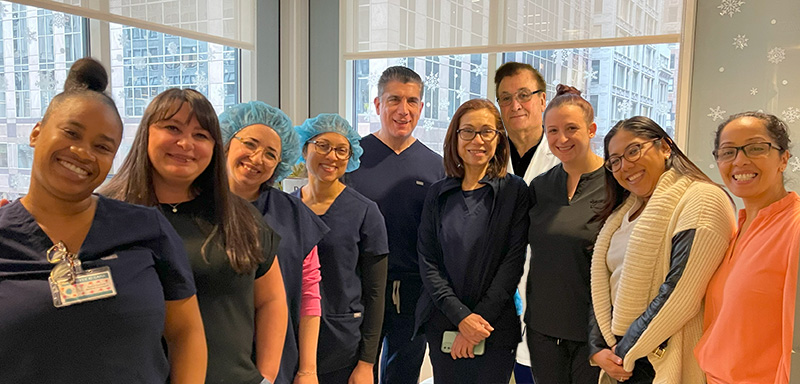
Group photo of the Sher Fertility Solutions clinic team

Where Are You On Your Fertility Journey?

I´m just starting out

I need more information

Ready to get started

Book a consultation

I need help

Ask a question

Su clínica de fertilidad de confianza en New York, NY

Tu viaje. Tu familia.

En Sher Fertility Solutions, entendemos que cada paciente es único. Todo lo que hacemos está personalizado para usted y sus necesidades específicas.

Group photo of the Sher Fertility Solutions clinic team

Nuestros Servicios

Fertilización In Vitro (IVF)

La Fertilización In Vitro (IVF) es uno de los tratamientos de fertilidad más efectivos. Este proceso implica la combinación de óvulos y espermatozoides en un laboratorio para crear embriones, que luego se transfieren al útero. Más información sobre IVF

Inseminación Intrauterina (IUI)

La Inseminación Intrauterina (IUI) es un procedimiento menos invasivo en el que se colocan espermatozoides directamente en el útero durante la ovulación. Es una opción popular para parejas con problemas leves de fertilidad. Más información sobre IUI

Congelación de Óvulos

La Congelación de Óvulos permite a las mujeres preservar su fertilidad para el futuro. Este procedimiento es ideal para aquellas que desean retrasar la maternidad por razones personales o médicas. Más información sobre Congelación de Óvulos

Reserve una consulta

Si está interesado en tener una consulta sobre tratamiento de fertilidad con uno de nuestros médicos, por favor complete este formulario

Su clínica de fertilidad de confianza en New York, NY

Five Start Rating

Your Trusted Fertility Clinic in New York, NY
Five Start Rating

Your Trusted Fertility Clinic in New York, NY

The Best of Dr. Sher on The Egg Whisperer Show

Our Services

Infertility diagnosis/treatment

The causes of infertility are multiple and are often difficult to define but may include anatomical conditions involving tubal patency and/or function as well as diseases of the testicles and/or or sperm ducts, dysfunctional levels of certain hormones in both men and women, and ovulation difficulties in women.

Recurrent miscarriage diagnosis/treatment

The time has come to embrace the reality that the term “unexplained” is rarely applicable to 1) infertility of unknown cause, 2) repeated IVF failure, and 3) recurrent pregnancy loss (RPL). More often than not, rather than being “unexplained,” the condition is simply ignored and as such remains “undiagnosed.” All that is needed is to investigate and treat the issue appropriately in order to solve the problem.

Egg freezing for future fertility

There are many reasons why patients may need to preserve their fertility. For some, it may be a focus on education and career delays and for others it may be due to an illness. Although the decline in reproductive potential that occurs with age cannot be reversed, freezing your eggs at a younger age may allow the eggs to be preserved until you are ready to conceive. While there are no guarantees, using cryopreserved eggs may improve your chances for pregnancy in the future.

Testimonials

Ask Our Doctors

Dear Patients,
I created this forum to welcome any questions you have on the topic of infertility, IVF, conception, testing, evaluation, or any related topics. I do my best to answer all questions in less than 24 hours. I know your question is important and, in many cases, I will answer within just a few hours. Thank you for taking the time to trust me with your concern.

– Geoffrey Sher, MD

Name: Jessica S

How do you handle repeated failed fertilization? Does/can estrogen/prog before the cycle make this worse? We have already added calcium ioniphore.

Answer:

One of the commonest questions asked by patients undergoing IVF relates to the likelihood of their eggs fertilizing and the likely “quality of their embryos. This is also one of the most difficult questions to answer. On the one hand many factors that profoundly influence egg quality; such as the genetic recruitment of eggs for use in an upcoming cycle, the woman’s age and her ovarian reserve, are our outside of our control. On the other hand the protocol for controlled ovarian stimulation (COS) can also profoundly influence egg/embryo development and this is indeed chosen by the treating physician.


First; it should be understood that the most important determinant of fertilization potential, embryo development and blastocyst generation, is the numerical chromosomal integrity of the egg (While sperm quality does play a role, in the absence of moderate to severe sperm dysfunction this is (moderate or severe male factor infertility a relatively small one). Human eggs have the highest rate of numerical chromosomal irregularities (aneuploidy) of all mammals. In fact only about half the eggs of women in their twenties or early thirties, have the required number of chromosomes (euploid), without which upon fertilization the cannot propagate a normal pregnancy. As the woman advances into and beyond her mid-thirties, the percentage of eggs euploid eggs declines progressively such that by the age of 40 years, only about one out of seven or eight are likely to be chromosomally normal and by the time she reaches her mid-forties less than one in ten of her eggs will be euploid.


Second; embryos that fail to develop into blastocysts are almost always aneuploid and not worthy of being transferred to the uterus because they will either not implant, will miscarry or could even result in a chromosomally abnormal baby (e.g. Down syndrome). However, it is incorrect to assume that all embryos reaching the blastocyst stage will be euploid (“competent”).  ). It is true that since many aneuploid embryos are lost during development and that those failing to survive to the blastocyst stage are far more likely to be competent than are earlier (cleaved) embryos.  What is also true is that the older the woman who produces the eggs, the less likely it is that a given blastocyst will be “competent”. As an example, a morphologically pristine blastocyst derived from the egg of a 30 year old woman would have about a 50:50 chance of being euploid and a 30% chance of propagating a healthy, normal baby, while a microscopically comparable blastocyst derived through fertilization of the eggs from a 40 year old, would be about half as likely to be euploid and/or propagate a healthy baby.


While the effect of species on the potential of eggs to be euploid at ovulation is genetically preordained and nothing we do can alter this equation, there is unfortunately a lot we can (often unwittingly) do to worsen the situation by selecting a suboptimal protocol of controlled ovarian stimulation (COS). This, by creating an adverse intraovarian hormonal environment will often disrupt normal egg development and lead to a higher incidence of egg aneuploidy than otherwise might have occurred.  Older women, women with diminished ovarian reserve (DOR) and those with polycystic ovarian syndrome are especially vulnerable in this regard.


During the normal, ovulation cycle, ovarian hormonal changes are regulated to avoid irregularities in production and interaction that could adversely influence follicle development and egg quality. As an example, small amounts of androgens (male hormones such as testosterone), that are produced by the ovarian stroma (tissue surrounding ovarian follicles) during the pre-ovulatory phase of the cycle enhance late follicle development, estrogen production by the granulosa cells (that line the inner walls of follicles), and egg maturation. However, over-production of testosterone can adversely influence the same processes. It follows that COS protocols should be individualized and geared toward optimizing follicle growth and development time while avoiding excessive ovarian androgen (testosterone) production and that the hCG “trigger shot” should be carefully timed.


In summary it is important to understand the influence species, age of the woman as well as the effect of the COS protocol can have on egg/embryo quality and thus on IVF outcome. The selection of an individualized protocol for ovarian stimulation is one of the most important decisions that the RE has to make and this becomes even more relevant when dealing with older women, those with DOR and women with PCOS. Such factors will in large part determine fertilization potential, the rate of blastocyst generation and indeed IVF outcome.

______________________________________________

PLEASE SHARE THIS WITH OTHERS AND HELP SPREAD THE WORD!!


Herewith are  online links to 2  E-books recently  co-authored with  my partner at SFS-NY  (Drew Tortoriello MD)……. for your reading pleasure:

  1. From In Vitro Fertilization to Family: A Journey with Sher Fertility Solutions (SFS) ; http://sherfertilitysolutions.com/sher-fertility-solutions-ebook.pdf


  1. Recurrent Pregnancy Loss and Unexplained IVF Failure: The Immunologic Link ;https://drive.google.com/file/d/1iYKz-EkAjMqwMa1ZcufIloRdxnAfDH8L/view


I invite you to visit my very recently launched “Podcast”,  “HAVE A BABY” on RUMBLE;   https://rumble.com/c/c-3304480

If you are interested in having an online consultation with me, please contact my assistant, Patti Converse at 702-533-2691 or email her at concierge@sherivf.com\


Latest Videos

Blog

No Results Found

The page you requested could not be found. Try refining your search, or use the navigation above to locate the post.

Our Team
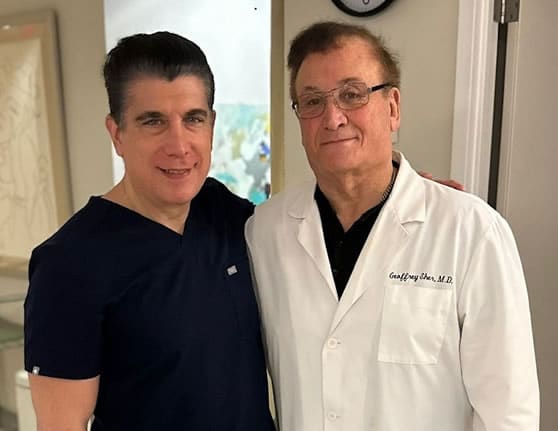
The emphasis we put on innovative, state-of-the-art technology began with our founder, Dr. Geoffrey Sher, one of the pioneers in the field of IVF, who has been influential in the births of more than 17,000 IVF babies. Dr. Sher plays an active role alongside our medical director, Dr. Drew Tortoriello. Together they have over 55 years of clinical and academic experience in the field of Reproductive Medicine.

Together, they were the first to introduce Preimplantation Genetic Testing which vastly increases the chances of IVF success and is now performed worldwide. They also pioneered the testing and treatment of Immunologic Implantation Dysfunction (IID) that frequently leads to “unexplained” infertility, repeated IVF failure, and recurrent miscarriage. We’re able to conduct a variety of other treatments and tests right on site. For example, we offer on-site sperm testing to ensure proper sperm selection techniques are used to create the healthiest possible embryos.

For those women seeking to preserve their fertility, we offer vitrification, a state-of-the-art technology that ensures their eggs will ultimately be thawed successfully.

From the moment you walk into our state-of-the-art New York fertility clinic, you’ll feel the warmth and compassion that will define your experience with us. Drew Tortoriello, MD serves as our Medical Director. He’s an outstanding fertility specialist that you’ll find to be caring, compassionate and personable.

When you receive fertility treatment with us, your doctor will participate with hands-on management of your case throughout your treatment. We’ve gained a reputation of being the place to turn to when all other treatment options have failed, and patients are searching for hope and fresh alternatives.

TL;DR:

  • Our doctors are among the best in the world, with over 55 years of combined experience
  • Together, they pioneered several tests and treatments that can help where other treatments have failed
  • We do many tests right here at the clinic, which means faster results and ensures proper techniques are used
  • Your doctor will be with you at every step of your treatment
  • Everyone here will get to know you during your treatment so you won’t just feel like a number
  • We’re known for being the clinic to go to when all other treatments have failed

Author