Your Trusted Fertility Clinic In New York, NY

Your Journey. Your Family.

At Sher Fertility Solutions, we understand that each patient is unique. Everything we do is customized to you and your specific needs.
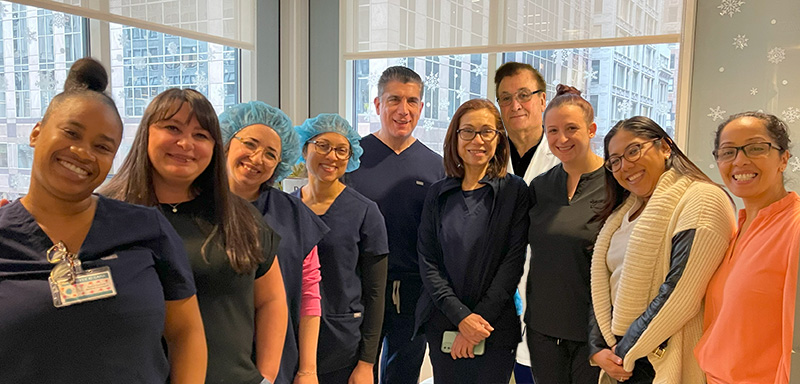
Group photo of the Sher Fertility Solutions clinic team

Where Are You On Your Fertility Journey?

I´m just starting out

I need more information

Ready to get started

Book a consultation

I need help

Ask a question

Su clínica de fertilidad de confianza en New York, NY

Tu viaje. Tu familia.

En Sher Fertility Solutions, entendemos que cada paciente es único. Todo lo que hacemos está personalizado para usted y sus necesidades específicas.

Group photo of the Sher Fertility Solutions clinic team

Nuestros Servicios

Fertilización In Vitro (IVF)

La Fertilización In Vitro (IVF) es uno de los tratamientos de fertilidad más efectivos. Este proceso implica la combinación de óvulos y espermatozoides en un laboratorio para crear embriones, que luego se transfieren al útero. Más información sobre IVF

Inseminación Intrauterina (IUI)

La Inseminación Intrauterina (IUI) es un procedimiento menos invasivo en el que se colocan espermatozoides directamente en el útero durante la ovulación. Es una opción popular para parejas con problemas leves de fertilidad. Más información sobre IUI

Congelación de Óvulos

La Congelación de Óvulos permite a las mujeres preservar su fertilidad para el futuro. Este procedimiento es ideal para aquellas que desean retrasar la maternidad por razones personales o médicas. Más información sobre Congelación de Óvulos

Reserve una consulta

Si está interesado en tener una consulta sobre tratamiento de fertilidad con uno de nuestros médicos, por favor complete este formulario

Su clínica de fertilidad de confianza en New York, NY

Five Start Rating

Your Trusted Fertility Clinic in New York, NY
Five Start Rating

Your Trusted Fertility Clinic in New York, NY

The Best of Dr. Sher on The Egg Whisperer Show

Our Services

Infertility diagnosis/treatment

The causes of infertility are multiple and are often difficult to define but may include anatomical conditions involving tubal patency and/or function as well as diseases of the testicles and/or or sperm ducts, dysfunctional levels of certain hormones in both men and women, and ovulation difficulties in women.

Recurrent miscarriage diagnosis/treatment

The time has come to embrace the reality that the term “unexplained” is rarely applicable to 1) infertility of unknown cause, 2) repeated IVF failure, and 3) recurrent pregnancy loss (RPL). More often than not, rather than being “unexplained,” the condition is simply ignored and as such remains “undiagnosed.” All that is needed is to investigate and treat the issue appropriately in order to solve the problem.

Egg freezing for future fertility

There are many reasons why patients may need to preserve their fertility. For some, it may be a focus on education and career delays and for others it may be due to an illness. Although the decline in reproductive potential that occurs with age cannot be reversed, freezing your eggs at a younger age may allow the eggs to be preserved until you are ready to conceive. While there are no guarantees, using cryopreserved eggs may improve your chances for pregnancy in the future.

Testimonials

Ask Our Doctors

Dear Patients,
I created this forum to welcome any questions you have on the topic of infertility, IVF, conception, testing, evaluation, or any related topics. I do my best to answer all questions in less than 24 hours. I know your question is important and, in many cases, I will answer within just a few hours. Thank you for taking the time to trust me with your concern.

– Geoffrey Sher, MD

Name: Yael G

Hello Dr.Sher,
I am interested to know what your thoughts are on my situation. I am starting my first egg retrieval in the upcoming months and I’m 40 years old, with lean pcos (5’7 and 130 lbs) and with an AMH of 46.5 pmol/l. I know I am at a high risk of OHSS. What would you suggest medication wise for stims? My doc is thinking rekovelle and menopur with Lupron trigger.
Also would you suggest a mini ivf? And most importantly, if I did develop OHSS…would I be at an increased risk of cancer of the ovaries later?

Answer:

Polycystic ovary syndrome (PCOS) is a common hormonal system disorder among women affecting between 5% and 10% of women of reproductive age worldwide.  Women with PCOS may have enlarged ovaries that contain multiple small collections of fluid (subcapsular microcysts) that are arranged like a “string of pearls” immediately below the ovarian surface (capsule).interspersed by an overgrowth of ovarian connective tissue (stroma). The condition is characterized by abnormal ovarian function (irregular or absent periods, abnormal or absent ovulation and infertility, androgenicity (increased body hair or hirsutism, acne) and increased body weight –body mass index or BMI.


Women with PCOS are at increased risk that ovarian stimulation with gonadotropins will result in the, of development of severe ovarian hyperstimulation syndrome (OHSS), a life-endangering condition that is often accompanied by a profound reduction in egg quality. Such eggs will upon fertilization often yield an inordinately high percentage of “incompetent” embryos which have a reduced potential to propagate viable pregnancies.

Concern and even fear that their PCOS patients will develop of OHSS often leads the treating RE to take measures aimed at reducing these risks. In this regard, it is my opinion that the most important consideration is the selection and proper implementation of an individualized or customized   ovarian stimulation protocol.

What follows is a critical assessment of methods to prevent OHSS and/or limit its severity:

  1. PROLONGED COASTING…my preferred approach: My preferred approach is to use a long pituitary down-regulation protocol coming off the BCP which during the last 3 days is overlapped with the agonist, Lupron/Buserelin/Superfact. The BCP is intended to lower LH and thereby reduce stromal activation (hyperthecosis) in the hope of controlling LH-induced ovarian androgen (predominantly, testosterone) production and release. I then stimulate my PCOS patients using a low dosage of recombinant FSH-(FSHr) such as Follistim/Gonal-F/Puregon. On the 3rd day of such stimulation a smidgeon of LH/hCG (Luveris/Menopur) is added. Thereupon, starting on day 7 of ovarian stimulation, I perform serial blood estradiol (E2) and ultrasound follicle assessments, watching for the number and size of the follicles and the blood estradiol concentration [E2]. I keep stimulating (regardless of the [E2] until 50% of all follicles reach 14mm. At this point, provided the [E2] reaches at least >2,500pg/ml, I stop the agonist as well as gonadotropin stimulation and track the blood E2 concentration daily. The [E2] will almost invariably increase for a few days. I closely monitor the [E2] as it rises, plateaus and then begins to decline. As soon as the [E2] drops below 2500pg/ml (and not before then), I administer a “trigger” shot of 10,000U Profasi/ Novarel/Pregnyl or 500mcg Ovidrel/Ovitrel. This is followed by an egg retrieval, performed 36 hours later. Fertilization is accomplished using intracytoplasmic sperm injection (ICSI) because “coasted” eggs usually have little or no cumulus oophoris enveloping them and eggs without a cumulus will not readily fertilize naturally. Moreover, they also tend to have a “hardened” envelopment (zona pellucida), making spontaneous fertilization problematic in many cases.  All fertilized eggs are cultured to the blastocyst stage  (up to day 5- 6 days) and thereupon are either vitrified and preserved for subsequent transfer in later hormone replacement cycles or (up to 2) blastocysts are transferred to the uterus, transvaginally under transabdominal ultrasound guidance. The success of this approach depends on precise timing of the initiation and conclusion of “prolonged coasting”. If started too early, follicle growth will arrest and the cycle will be lost. If commenced too late, too many follicles will be post-mature/cystic (>22mm) and as such will usually harbor abnormal or dysmature eggs.  Use of “Coasting” almost always prevents the development of severe OHSS, optimizes egg/embryo quality and avoids unnecessary cycle cancellation. If correctly implemented, the worst you will encounter is moderate OHSS and this too is relatively uncommon.
  2. MULTIPLE FOLLICLE ASPIRATION: In some cases, in spite of best effort, you inadvertently find mean follicle size to exceed 16mm, thereby leaving too little time to implement “coasting”. On other occasions, “coasting” fails to effectively lower the [E2} below 2,500pg/ml within 3 days. In such case the number of developing follicles can effectively and drastically reduced (culled) through selective transvaginal aspiration prior to initiating the “trigger” with 10,000U hCG. This will almost invariably be accompanied by a rapid and significant drop in the plasma estradiol concentration along with a drastic reduction in the risk of OHSS occurring without significantly compromising egg/embryo quality. Upon completing surgical follicular reduction, the surviving follicles can be allowed to continue their full development, at which point the hCG “trigger” can be implemented. The drawback associated with this approach is that it unfortunately interjects an additional surgical intervention into an already complex and stressful situation.
  3. EMBRYO FREEZING AND DEFERMENT OF EMBRYO TRANSFEDR (ET): OHSS is always a self-limiting condition. In the absence of continued exposure to hCG, symptoms and signs as well as the risk of severe complications will ultimately abate. Thus, in the absence of pregnancy, all symptoms, signs and risks associated with OHSS will disappear within about 10-14 days of the hCG trigger. Conversely, since early pregnancy is always accompanied by a rapid and progressive rise in hCG , the severity of OHSS will increase until about the 9th or tenth gestational week whereupon a transition from ovarian to placental hormonal dominance occurs, the severity of OHSS rapidly diminishes and the patient will be out of risk. Accordingly, in cases where in spite of best effort to prevent OHSS, the woman develops symptoms and signs of progressive overstimulation prior to planned ET, all the blastocysts should be vitrified and cryostored for FET in a subsequent hormone replacement cycle. In this way women with OHSS can be spared the risk of the condition spiraling out of control.
  4. TRIGGERING WITH LOW DOISAGE hCG; Because of the fact that hCG augments the development of OHSS, many RE’s prefer to use a reduced dosage of hCG for the “trigger. This is either done by administering 5,000U (half the traditional dosage) or by administering, a 250mcg (rather than 500mcg) of DNA recombinant form of hCGr (Ovidrel/Ovitrel) in the hope that by doing so the risk of critical OHSS developing will be lowered. While this indeed might be true, it is my opinion, that the reduced dosage is usually insufficient to optimize the efficiency of egg meiosis, especially when there are so many follicles present. Thus, while the use of a reduced “trigger” dosage of hCG might well reduce the risk and occurrence of OHSS-related life-endangering complications, the price to be paid is reduced egg quality/”competency”.
  5. “TRIGGERING” WITH A GnRH AGONIST (E.G. “LUPRON/BUSERELIN): More recently, an increasing number of RE’s are triggering egg maturation by way of injecting  an agonist (Lupron/Buserelin/Superfact)  to initiate the patient’s own pituitary gland to release a large amount of LH.  The idea is to mimic what happens in natural cycles to promote egg maturation (meiosis) and ovulation, namely to have the agonist cause a “surge” in the release of body’s own pituitary LH to trigger egg meiosis (maturation) .But the amount of LH released in by the pituitary gland is often insufficient to optimize meiotic egg maturation and thus, while this approach also lowers the risk of OHSS it again comes at the expense of egg quality/competency.


A word of caution: I do not use long term administration of antagonists (Ganirelix/Cetrotide/Orgalutron), such as with the agonist/antagonist conversion protocol (A/ACP) in high responders whom are at risk of developing OHSS prolonged in-cycle administration of  because it can interfere with the E2  assay (often causing the value to be understated), and serial measurement of E2 is a vital part of monitoring patients undergoing “coasting”

_________________________________________________________________________________________

ADDITIONAL INFORMATION:

I am attaching online links to two E-books which I recently  co-authored with  my partner at SFS-NY  (Drew Tortoriello MD)……. for your reading pleasure:

1.From In Vitro Fertilization to Family: A Journey with Sher Fertility Solutions (SFS) “

http://sherfertilitysolutions.com/sher-fertility-solutions-ebook.pdf

  1. “Recurrent Pregnancy Loss and Unexplained IVF Failure: The Immunologic Link

https://drive.google.com/file/d/1iYKz-EkAjMqwMa1ZcufIloRdxnAfDH8L/view

………………………………………………………………..

Latest Videos

Blog

No Results Found

The page you requested could not be found. Try refining your search, or use the navigation above to locate the post.

Our Team
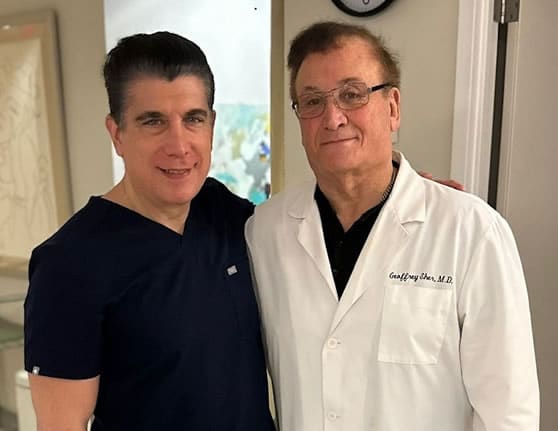
The emphasis we put on innovative, state-of-the-art technology began with our founder, Dr. Geoffrey Sher, one of the pioneers in the field of IVF, who has been influential in the births of more than 17,000 IVF babies. Dr. Sher plays an active role alongside our medical director, Dr. Drew Tortoriello. Together they have over 55 years of clinical and academic experience in the field of Reproductive Medicine.

Together, they were the first to introduce Preimplantation Genetic Testing which vastly increases the chances of IVF success and is now performed worldwide. They also pioneered the testing and treatment of Immunologic Implantation Dysfunction (IID) that frequently leads to “unexplained” infertility, repeated IVF failure, and recurrent miscarriage. We’re able to conduct a variety of other treatments and tests right on site. For example, we offer on-site sperm testing to ensure proper sperm selection techniques are used to create the healthiest possible embryos.

For those women seeking to preserve their fertility, we offer vitrification, a state-of-the-art technology that ensures their eggs will ultimately be thawed successfully.

From the moment you walk into our state-of-the-art New York fertility clinic, you’ll feel the warmth and compassion that will define your experience with us. Drew Tortoriello, MD serves as our Medical Director. He’s an outstanding fertility specialist that you’ll find to be caring, compassionate and personable.

When you receive fertility treatment with us, your doctor will participate with hands-on management of your case throughout your treatment. We’ve gained a reputation of being the place to turn to when all other treatment options have failed, and patients are searching for hope and fresh alternatives.

TL;DR:

  • Our doctors are among the best in the world, with over 55 years of combined experience
  • Together, they pioneered several tests and treatments that can help where other treatments have failed
  • We do many tests right here at the clinic, which means faster results and ensures proper techniques are used
  • Your doctor will be with you at every step of your treatment
  • Everyone here will get to know you during your treatment so you won’t just feel like a number
  • We’re known for being the clinic to go to when all other treatments have failed

Author