Your Trusted Fertility Clinic In New York, NY

Your Journey. Your Family.

At Sher Fertility Solutions, we understand that each patient is unique. Everything we do is customized to you and your specific needs.
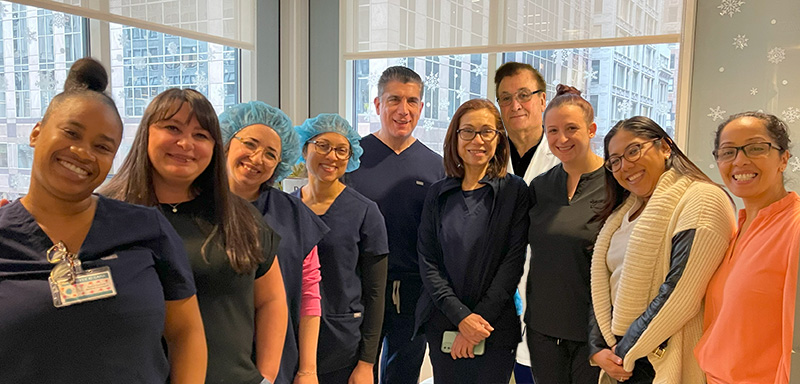
Group photo of the Sher Fertility Solutions clinic team

Where Are You On Your Fertility Journey?

I´m just starting out

I need more information

Ready to get started

Book a consultation

I need help

Ask a question

Su clínica de fertilidad de confianza en New York, NY

Tu viaje. Tu familia.

En Sher Fertility Solutions, entendemos que cada paciente es único. Todo lo que hacemos está personalizado para usted y sus necesidades específicas.

Group photo of the Sher Fertility Solutions clinic team

Nuestros Servicios

Fertilización In Vitro (IVF)

La Fertilización In Vitro (IVF) es uno de los tratamientos de fertilidad más efectivos. Este proceso implica la combinación de óvulos y espermatozoides en un laboratorio para crear embriones, que luego se transfieren al útero. Más información sobre IVF

Inseminación Intrauterina (IUI)

La Inseminación Intrauterina (IUI) es un procedimiento menos invasivo en el que se colocan espermatozoides directamente en el útero durante la ovulación. Es una opción popular para parejas con problemas leves de fertilidad. Más información sobre IUI

Congelación de Óvulos

La Congelación de Óvulos permite a las mujeres preservar su fertilidad para el futuro. Este procedimiento es ideal para aquellas que desean retrasar la maternidad por razones personales o médicas. Más información sobre Congelación de Óvulos

Reserve una consulta

Si está interesado en tener una consulta sobre tratamiento de fertilidad con uno de nuestros médicos, por favor complete este formulario

Su clínica de fertilidad de confianza en New York, NY

Five Start Rating

Your Trusted Fertility Clinic in New York, NY

Five Start Rating

Your Trusted Fertility Clinic in New York, NY

The Best of Dr. Sher on The Egg Whisperer Show

Our Services

Infertility diagnosis/treatment

The causes of infertility are multiple and are often difficult to define but may include anatomical conditions involving tubal patency and/or function as well as diseases of the testicles and/or or sperm ducts, dysfunctional levels of certain hormones in both men and women, and ovulation difficulties in women.

Recurrent miscarriage diagnosis/treatment

The time has come to embrace the reality that the term “unexplained” is rarely applicable to 1) infertility of unknown cause, 2) repeated IVF failure, and 3) recurrent pregnancy loss (RPL). More often than not, rather than being “unexplained,” the condition is simply ignored and as such remains “undiagnosed.” All that is needed is to investigate and treat the issue appropriately in order to solve the problem.

Egg freezing for future fertility

There are many reasons why patients may need to preserve their fertility. For some, it may be a focus on education and career delays and for others it may be due to an illness. Although the decline in reproductive potential that occurs with age cannot be reversed, freezing your eggs at a younger age may allow the eggs to be preserved until you are ready to conceive. While there are no guarantees, using cryopreserved eggs may improve your chances for pregnancy in the future.

Testimonials

Ask Our Doctors

Dear Patients,
I created this forum to welcome any questions you have on the topic of infertility, IVF, conception, testing, evaluation, or any related topics. I do my best to answer all questions in less than 24 hours. I know your question is important and, in many cases, I will answer within just a few hours. Thank you for taking the time to trust me with your concern.

– Geoffrey Sher, MD

Name: Mash P

Hello, I am 41 years old. I am a friend of Ivan Sher’s for many years and he mentioned I could get some help from Dr. Sher on here. My AMH levels are 2.87. We started IVF when I was 40, in July 2022. Mainly because of reasons not for me. In July we retrieved 27 eggs, 25 mature, 17 fertilized, 7 embryos, after PGT 1 normal and 1 low level +19 mosaic. We used fresh sperm. CoQ10 and prenatal vitamins only supplements. Second retrieval in September 2022. 27 retrieved, 25 mature, 22 fertilized, 9 embryos, 2 normal after PGT and 1 inconclusive. We used fresh sperm again and same supplements. Did a transfer in October and I was pregnant. Mis carried at 9 weeks, end of November. Did a second transfer in January and that transfer failed. switched doctors. Did a mock trial. Doctor said I have a little bit of andemyosis on one part of my lining that we will supress for 3 months with Lupron Depot then we can do a 3rd transfer in June. I said I will do a 3rd retrieval to try and bank more embryos for the future. I asked if we should supress before retrieval and they told me no that my ovaries don’t have anything to do with my uterus and the andemyosis is only on my uterus. March 2023 i do my 3rd retrieval. We received 32 eggs, 21 mature, 15 fertilized and ONLY 1 EMBRYO THIS TIME which is currently out for PGT. I was in complete shock with the difference in my results. We used Frozen Sperm this time and an entire list of supplements the doc gave me. I asked my Doctor WHY this happened ? He said either the frozen sperm didn’t work well or my andemyosis progressed and stimulated during stim. I told him I had asked to supress prior to the retrieval and they told me I don’t need to and he said that we didn’t know It progressed and obviously they still don’t know. It is just a guess either that happened or it’s the frozen sperm. I’m incredibly frustrated. Last Friday I took my first shot of Lupron. I have one normal and one embryo left and one out for PGT … God knows if that one will come back normal. I’m 41.5 now and I just want to have our baby. I really don’t want to do a 4th retrieval and want to just transfer in June. My question is, why do you feel my results this time came back with almost no embryos ? Doc said most arrested around day 4 and 5. I wish they had called me at Day 3 to update me. Any advice on what I should do next after I am on this Lupron for 3 months ? I’m worried if i do a 4th retrieval and then a frozen transfer 5 days after in June, I risk my embryo implanting due to my andemyosis being triggered again from stims, even after Lupron. I was thinking either to do a 4th retrieval in June and transfer 3 day 3 fresh embryos from that retrieval as to not risk losing embryos again and then if there are more embryos, freeze them and send out for PGT testing. That way I still have one normal and one mosaic frozen and if June transfer fails, i can do another transfer in July with a frozen. I am trying to not waste time. Luckily I have a high egg count but this process has been very frustrating and disheartening. a lot of trial and error. I don’t believe i ever had endometriosis or andeymosis before starting IVF. I have been pregnant naturally before. I would love to hopefully hear back from you. I really appreciate your advice. Ivan speaks so incredibly highly of you !!! I wish I could meet you ! you have helped some friends of mine as well.

Answer:

I am flattered that Ivan referred you to me and will do my best to advise. The response will be lengthy but please read it carefully:

There are several issues that apply here

1, AGE: It is primarily the egg (rather than the sperm) that determines the chromosomal integrity (karyotype) of the embryo, the most important determinant of egg/embryo competency”. A “competent” egg is therefore one that has a normal karyotype and has the best potential to propagate a “competent” embryo. In turn, a “competent embryo is one that possesses the highest potential to implant and develop into a normal, healthy, baby.

When it comes to reproductive performance, humans are the least efficient of all mammals. Even in young women under 35y, at best only 2 out of 3 eggs are chromosomally numerically normal (euploid). The remainder will have an irregular number of chromosomes (aneuploid) and are thus “incompetent”. The incidence of egg aneuploidy increases with age such by age 39 years, 3 in 4 are “competent”, and by the mid-forties, at best one in 10 are likely to be aneuploid. The fertilization of an aneuploid egg will inevitably lead to embryo aneuploidy (“incompetence”). As previously stated,   an aneuploid embryo cannot propagate a normal pregnancy s. For the embryo to have exactly 46 chromosomes (the euploid number), both the mature egg and mature spermatozoon must contain exactly 23 chromosomes. Only such euploid embryos are “competent” (capable of developing into healthy babies). Those with an irregular number of chromosomes (aneuploid embryos) are “incompetent” and are incapable of propagating healthy babies. While embryo “incompetence” can result from either egg or sperm aneuploidy, it usually stems from egg aneuploidy. However, in cases of moderate or severe male factor infertility, the sperm’s contribution to aneuploidy of the embryo can be significantly greater.

While embryo ploidy (numerical chromosomal integrity) is not the only determinant of its “competency, it is by far the most important and in fact is a rate-limiting factor in human reproduction. It is causal in the vast majority of cases of “failed nidation which in turn is responsible for most cases of a failed pregnancy (natural or assisted) and causes most sporadic early pregnancy losses (both chemical gestations and miscarriages) as well as  many chromosomal birth defects such as Turner syndrome (X-monosomy ) Down syndrome (trisomy 21) and Edward syndrome (trisomy 18) . In most cases, embryos that develop too slowly as well as those that grow too fast (i.e. ones that by day 3 post-fertilization comprise fewer than 6 cells or more than 9 cells) and/or embryos that contain cell debris or “fragments” are usually aneuploid and are thus unable to propagate a healthy pregnancy (i.e. they are “incompetent”). Additionally, embryos that fail to survive in culture to the blastocyst stage are also almost always aneuploid/”incompetent”. .Advancing chronologic age ais almost invariably associated  increased incidence of egg/embryo “incompetence” due to aneuploidy

The ovaries and developing eggs of older women are highly susceptible to the adverse effect of excessive Luteinizing Hormone (LH)-induced, ovarian overproduction of male hormones (e,g. testosterone and androstenedione). While a little testosterone produced by the ovaries is essential because for normal  and orderly egg development excessive testosterone has a converse effect. That is an important reason why older women who almost invariably have  excessive LH bioavailability and thus, increased ovarian testosterone production are at greater risk of propagating aneuploid eggs/embryos. Especially in such women, the use of individualized stimulation protocols that down- regulate LH production and so regulate ovarian testosterone will help to  improve egg yield, development and chromosomal integrityl and thereby    also embryo competency. Conversely, in such women, the use of ovarian stimulation protocols that fail to down-regulate LH activity prior to initiating ovarian stimulation with gonadotropins, often prejudices egg/embryo yield, quality and IVF outcome. This can manifest as an inordinately high yield of aneuploid embryos and/or low blastocyst propagation (bear in mind that egg which upon fertilization fail to propagate blastocysts are almost always aneuploid and “incompetent”. The only way to try to minimize this effect is by using indidualizing  protocols of ovarian stimulation, that down-regulate the LH-nduced effect.

  • The conventional long pituitary down regulation protocol: BCP are commenced early in the cycle and continued for at least 10 days. Starting 3 days before the BCP is to be discontinued, it is overlapped with an agonist such as Lupron 10U daily for three (3) days and continued until menstruation begins (which should ensue within 5-7 days of stopping the BCP). At that point an US examination is done along with a baseline measurement of blood estradiol to exclude a functional ovarian cyst. Daily Lupron (10U) is continued and an FSH-dominant gonadotropin such as Follistim, Puregon or Gonal-f daily is administered daily falong with 37.5U of Menopur (an FSH/LH combination) for 2 days. On the 3rd day the gonadotropin dosage is reduced by about one half and the dosage of Menopur is increased to 75U daily. Daily ultrasound and blood estradiol measurements are conducted starting on the 7th or 8th day of gonadotropin administration and continued until daily ultrasound follicle assessments indicate that most follicles have fully developed. At this point egg maturation is “triggered” using an intramuscular injection of a recombinant hCGr (Ovidrel) 500mcg or urinary derived hCGu (Pregnyl/Profasi/Novarel) 10,000U. And an egg retrieval is scheduled for 36h later.
  • The agonist/antagonist conversion protocol (A/ACP): This is essentially the same as the conventional long down regulation protocol (see “a”-as above), except that with the onset of post-BCP menstruation, the agonist is supplanted by daily administration of a GnRH antagonist (e.g. Ganirelix, Cetrotide or Orgalutron) at a dosage of 250mcg daily until the day of the “trigger”. When it comes to women who have DOR I favor the use of the A/ACP, adding supplementary human growth hormone (HGH). In cases where the DOR is regarded as severe (AMH=<0.2), I often augment  the AACP protocol by using estrogen priming for 7-9 days prior to or with the commencement of gonadotropin therapy; For this I prescribe E2 skin patches  or intramuscular  estradiol valerate (Delestrogen), prior to or sometimes concurrent with, the  commencement of the GnRH antagonist administration
  • The following Ovarian stimulation protocols are in my opinion best avoided in stimulating olderf women and /or thosed who regardless of age , have  DOR :
  1. Agonist (e.g. Lupron/Superfact/Buserelin) “flare” protocols which result in an out-pouring of pituitary-LH at the critical time that ovarian follicles and eggs start developing/growing.
  2. High dosages of LH -containing fertility drugs (e.g. Menopur) can also prejudice egg development and “competency”. Similarly, augmentation of the stimulation with LH0analogues such as hCG is in my opinon, likewise best avoided.
  3. Supplementation with preparations that are testosterone-based such as Androgel are also, in my opinion, ill advised.
  4. Supplementation with DHEA (which is converted to testosterone in the ovaries.
  5. Clomiphene citrate or Letrozole which cause increased release of LH and thus increase ovarian male hormone (testosterone and androstenedione output are in my opinion, best avoided.
  6. Triggering” egg maturation using too low a dosage of hCG (e.g. 5,000U rather than 10,000U) or Ovidrel (e.g. 250mcg of Ovidrel rather than 500mcg)
  7. “Triggering” with an agonist (alone) such as Lupron Superfact/ Buserelin/Aminopeptidyl/Decapeptyl will result in the expunging of LH from the pituitary gland with resultant increased production of ovarian testosterone.

B. ADENOMYOSIS: This condition cannot be disanosed by ultrasound or hysteroscopy. It required performance of pelvic MRI. And, in my opinion, prolonged down-regulation with Lupron has little , if any benefit when it comes to procuring pregnancy. Adenomyosis is a condition where endometrial glands develop outside the uterine lining (endometrium), within the muscular wall of the uterus (myometrium). Definitive diagnosis of adenomyosis is difficult to make. The condition should be suspected when a premenopausal woman (usually>25 years of age) presents with pelvic pain, heavy painful periods, pain with deep penetration during intercourse, “unexplained infertility” or repeated miscarriages and thereupon, when on digital pelvic examination she is found to have an often smoothly enlarged (bulky) soft tender uterus. Previously, a definitive diagnosis was only possible after a woman had her uterus removed (hysterectomy) and it this was inspected under a microscope. However the use of uterine magnetic resonance imaging (MRI) now permits reliable diagnosis. Ultrasound examination of the uterus on the other hand , while not permitting definitive diagnosis, is a very helpful tool in raising a suspicion of the existence of adenomyosis. Criteria used to make a diagnosis of adenomyosis on transvaginal ultrasound:

  • Smooth generalized enlargement of the uterus.
  • Asymmetrical thickening of one side of the (myometrium) as compared to another side.
  • Thickening (>12mm) of the junctional zone between the endometrium and myometrium with increased blood flow.
  • Absence of a clear line of demarcation between the endometrium and the myometrium
  • Cysts in the myometrium
  • One or more non discrete (not encapsulated) tumors (adenomyomas) in the myometrium.

Since there is no proven independent relationship between adenomyosis and egg/embryo quality any associated reproductive dysfunction (infertility/miscarriages) might be attributable to an implantation dysfunction. It is tempting to postulate that this is brought about by adenomyosis-related anatomical pathology at the endometrial-myometrial junction. However, many women with adenomyosis, do go on to have children without difficulty. Given that 30%-70% of women who have adenomyosis also have endometriosis…. a known cause of infertility, it is my opinion that infertility caused by adenomyosis is likely linked to endometriosis where infertility is at least in part due to a toxic pelvic environment that compromises egg fertilization potential and/or due to an immunologic implantation dysfunction (IID) linked to activation of uterine natural killer cells (NKa). Thus, in my opinion all women who are suspected of having adenomyosis-related reproductive dysfunction (infertility/miscarriages) should be investigated for endometriosis and for IID. The latter, if confirmed would make them candidates for selective immunotherapy (using intralipid/steroid/heparin) in combination with IVF.

Surgery: Conservative surgery to address adenomyosis-related infertility involves excision of portions of the uterus with focal or nodular adenomyosis and/or excision of uterine adenomyomas. It is very challenging and difficult to perform because adenomyosis does not have distinct borders that distinguish normal uterine tissue from the lesions. In addition, surgical treatment for adenomyosis-related reproductive dysfunction is of questionable value and of course is  not an option for diffuse adenomyosis.

Medical treatment: There are three approaches.

  • GnRH agonists (Buserelin/Lupron) which is thought to work by lowering estrogen levels.
  • Aromatase inhibitors such as Letrozole have also been tried with limited success
  • Inhibitors of angiogenesis: The junctional zone in women with adenomyosis may grow blood vessels more readily that other women (i.e. angiogenesis). A hormone known as VEGF can drive this process. It is against this background that it has been postulated that use of drugs that reduce the action of VEGF and thereby counter blood vessel proliferation in the uterus could have a therapeutic benefit. While worth trying in some cases, thus far such treatment has been rather disappointing
  • Immunotherapy to counter IID: The use of therapies such as Intralipid (or IVIG)/steroids/heparin in combination with IVF might well hold promise in those women with adenomyosis who have NKa.

Fortunately, not all women with adenomyosis are infertile. For those who are, treatment presents a real problem. Even when IVF is used and the woman conceives, there is still a significant risk of miscarriage. Since the condition does not compromise egg/embryo quality, women with adenomyosis-related intractable reproductive dysfunction who fail to benefit from all options referred to above…(including IVF) might as a last resort consider  Gestational surro resort consider  Gestational surrogacy.

C: GENETIC/CHROMOSOMAL EMBRYO TESTING:

Adenomyosis is a condition where endometrial glands develop outside the uterine lining (endometrium), within the muscular wall of the uterus (myometrium). Definitive diagnosis of adenomyosis is difficult to make. The condition should be suspected when a premenopausal woman (usually>25 years of age) presents with pelvic pain, heavy painful periods, pain with deep penetration during intercourse, “unexplained infertility” or repeated miscarriages and thereupon, when on digital pelvic examination she is found to have an often smoothly enlarged (bulky) soft tender uterus. Previously, a definitive diagnosis was only possible after a woman had her uterus removed (hysterectomy) and it this was inspected under a microscope. However the use of uterine magnetic resonance imaging (MRI) now permits reliable diagnosis. Ultrasound examination of the uterus on the other hand , while not permitting definitive diagnosis, is a very helpful tool in raising a suspicion of the existence of adenomyosis.

I would mbe happy to have an online consultation with you. Feel free to set this up by contacting my assistant, Patti Concerse (702-522-2691)

Geoff Sher

____________________________________________________________________________

ADDITIONAL INFORMATION:

I am attaching online links to two E-books which I recently  co-authored with  my partner at SFS-NY  (Drew Tortoriello MD)……. for your reading pleasure:

1.From In Vitro Fertilization to Family: A Journey with Sher Fertility Solutions (SFS) “

http://sherfertilitysolutions.com/sher-fertility-solutions-ebook.pdf

  1. “Recurrent Pregnancy Loss and Unexplained IVF Failure: The Immunologic Link

https://drive.google.com/file/d/1iYKz-EkAjMqwMa1ZcufIloRdxnAfDH8L/view

………………………………………………………………..


Latest Videos

Blog

No Results Found

The page you requested could not be found. Try refining your search, or use the navigation above to locate the post.

Our Team
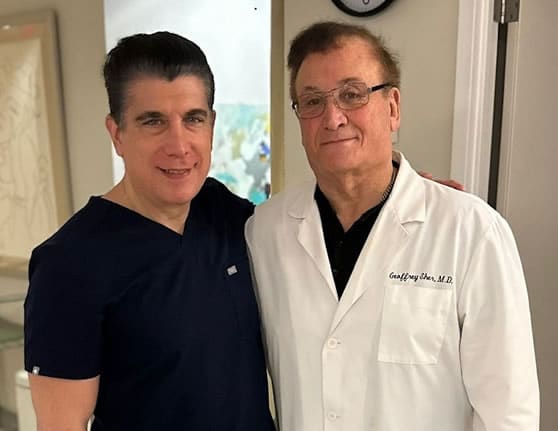
The emphasis we put on innovative, state-of-the-art technology began with our founder, Dr. Geoffrey Sher, one of the pioneers in the field of IVF, who has been influential in the births of more than 17,000 IVF babies. Dr. Sher plays an active role alongside our medical director, Dr. Drew Tortoriello. Together they have over 55 years of clinical and academic experience in the field of Reproductive Medicine.

Together, they were the first to introduce Preimplantation Genetic Testing which vastly increases the chances of IVF success and is now performed worldwide. They also pioneered the testing and treatment of Immunologic Implantation Dysfunction (IID) that frequently leads to “unexplained” infertility, repeated IVF failure, and recurrent miscarriage. We’re able to conduct a variety of other treatments and tests right on site. For example, we offer on-site sperm testing to ensure proper sperm selection techniques are used to create the healthiest possible embryos.

For those women seeking to preserve their fertility, we offer vitrification, a state-of-the-art technology that ensures their eggs will ultimately be thawed successfully.

From the moment you walk into our state-of-the-art New York fertility clinic, you’ll feel the warmth and compassion that will define your experience with us. Drew Tortoriello, MD serves as our Medical Director. He’s an outstanding fertility specialist that you’ll find to be caring, compassionate and personable.

When you receive fertility treatment with us, your doctor will participate with hands-on management of your case throughout your treatment. We’ve gained a reputation of being the place to turn to when all other treatment options have failed, and patients are searching for hope and fresh alternatives.

TL;DR:

  • Our doctors are among the best in the world, with over 55 years of combined experience
  • Together, they pioneered several tests and treatments that can help where other treatments have failed
  • We do many tests right here at the clinic, which means faster results and ensures proper techniques are used
  • Your doctor will be with you at every step of your treatment
  • Everyone here will get to know you during your treatment so you won’t just feel like a number
  • We’re known for being the clinic to go to when all other treatments have failed

Author