Your Trusted Fertility Clinic In New York, NY

Your Journey. Your Family.

At Sher Fertility Solutions, we understand that each patient is unique. Everything we do is customized to you and your specific needs.
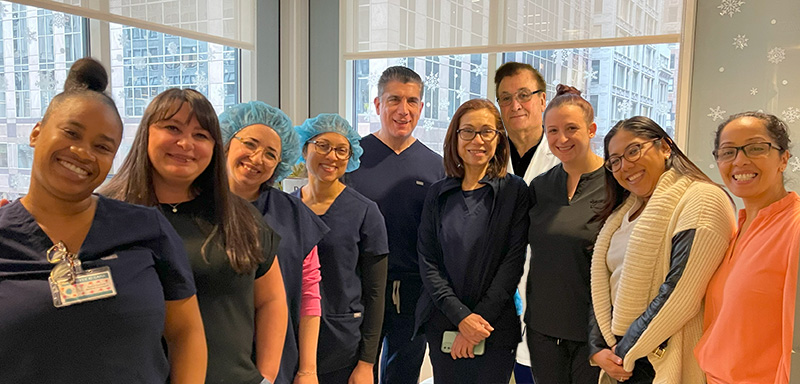
Group photo of the Sher Fertility Solutions clinic team

Where Are You On Your Fertility Journey?

I´m just starting out

I need more information

Ready to get started

Book a consultation

I need help

Ask a question

Su clínica de fertilidad de confianza en New York, NY

Tu viaje. Tu familia.

En Sher Fertility Solutions, entendemos que cada paciente es único. Todo lo que hacemos está personalizado para usted y sus necesidades específicas.

Group photo of the Sher Fertility Solutions clinic team

Nuestros Servicios

Fertilización In Vitro (IVF)

La Fertilización In Vitro (IVF) es uno de los tratamientos de fertilidad más efectivos. Este proceso implica la combinación de óvulos y espermatozoides en un laboratorio para crear embriones, que luego se transfieren al útero. Más información sobre IVF

Inseminación Intrauterina (IUI)

La Inseminación Intrauterina (IUI) es un procedimiento menos invasivo en el que se colocan espermatozoides directamente en el útero durante la ovulación. Es una opción popular para parejas con problemas leves de fertilidad. Más información sobre IUI

Congelación de Óvulos

La Congelación de Óvulos permite a las mujeres preservar su fertilidad para el futuro. Este procedimiento es ideal para aquellas que desean retrasar la maternidad por razones personales o médicas. Más información sobre Congelación de Óvulos

Reserve una consulta

Si está interesado en tener una consulta sobre tratamiento de fertilidad con uno de nuestros médicos, por favor complete este formulario

Su clínica de fertilidad de confianza en New York, NY

Five Start Rating

Your Trusted Fertility Clinic in New York, NY
Five Start Rating

Your Trusted Fertility Clinic in New York, NY

The Best of Dr. Sher on The Egg Whisperer Show

Our Services

Infertility diagnosis/treatment

The causes of infertility are multiple and are often difficult to define but may include anatomical conditions involving tubal patency and/or function as well as diseases of the testicles and/or or sperm ducts, dysfunctional levels of certain hormones in both men and women, and ovulation difficulties in women.

Recurrent miscarriage diagnosis/treatment

The time has come to embrace the reality that the term “unexplained” is rarely applicable to 1) infertility of unknown cause, 2) repeated IVF failure, and 3) recurrent pregnancy loss (RPL). More often than not, rather than being “unexplained,” the condition is simply ignored and as such remains “undiagnosed.” All that is needed is to investigate and treat the issue appropriately in order to solve the problem.

Egg freezing for future fertility

There are many reasons why patients may need to preserve their fertility. For some, it may be a focus on education and career delays and for others it may be due to an illness. Although the decline in reproductive potential that occurs with age cannot be reversed, freezing your eggs at a younger age may allow the eggs to be preserved until you are ready to conceive. While there are no guarantees, using cryopreserved eggs may improve your chances for pregnancy in the future.

Testimonials

Ask Our Doctors

Dear Patients,
I created this forum to welcome any questions you have on the topic of infertility, IVF, conception, testing, evaluation, or any related topics. I do my best to answer all questions in less than 24 hours. I know your question is important and, in many cases, I will answer within just a few hours. Thank you for taking the time to trust me with your concern.

– Geoffrey Sher, MD

Name: Julie A

Hello, is the dietary supplement Pregnitude a good supplement to take to help conceive? It contains Folic acid 200mg and mayo-inositol 2000mg. Thank you.

Answer:

Yes! It is a good supplement in my opinion.

GS

The Role of Nutritional Supplements in Preparing for IVF

Geoffrey Sher MD

It is important to nurture and take care of yourself mentally and physically when preparing and going through your IVF journey. This starts with trying to have a positive attitude about what you are about to go through, creating a stress support system for yourself by using tools such as visualization, acupuncture and meditation, eating the right foods taking a few supplements (see below) and balancing exercise with sufficient rest. Not only will it help your experience but it may also help to increase your chances for IVF success

This article will focus on the role of nutritional supplements in preparing for IVF. You’ve probably wondered whether commercially available fertility supplements could help you achieve your goal. The answer is complex.

Here is my take: Nutrition is indeed a vital prerequisite for optimal reproductive function. However, a well-balanced diet that meets food preferences, coupled with modest vitamin, mineral and antioxidant supplementation (as can be found in many prenatal vitamin preparations) should suffice.

This having been said, conceiving is a delicate process, and eating the right foods is essential to optimize reproductive potential. Indeed, a balanced diet (i.e. a lot of organic and brightly colored foods) will provide most of the nutrients you need. But the truth is that most people do not have a balanced diet and are unwittingly often deficient in important nutrients.

A balanced diet is one that is rich in good quality protein, low in sugar, salt, caffeine and industrially created trans-fats (trans-fatty acids or partially hydrogenated oils) and soy, uncontaminated by heavy metals, free of nicotine, alcohol and recreational drugs. This is why routine supplementation with the following nutrients could enhance preconception readiness:

  • Folic acid (400 micrograms daily)
  • Vitamins D-3 1,000U daily; Vitamin A (2565 IU daily); B3/Niacin (250mg daily); B6 (6mg -10 mg daily); B12 (12-20 mcg per day); C- (2,000 mg a day for both men and women); E (both sexes should get 150-200U daily); Vitamin D3 (2000U daily)
  • Co-enzyme Q10 (400-600mg daily )
  • Amino acids such as L-Carnitine (3 grams daily) and L-arginine (1 gram per day )
  • Omega 3 fatty acids (2,000mg per day)
  • Minerals, mainly zinc (15mg per day); selenium (70-100mcg per day); iron (up to 20mg per day ); magnesium (400mg per day )

There are likely to be significant reproductive health benefits (including enhanced fertility and intrauterine development) associated with the use of nutritional supplements. However, there are also certain potential pitfalls associated with their use. Some supplements are not as safe as they would seem. For example, excessive intake of fat-soluble vitamins (A, D, E and K) can even be dangerous to your health and may be associated with fetal malformations.

Additionally, numerous supplements have been found to contain contaminants such as toxic plant materials, heavy metals and even prescription medications that can compromise fetal development. Prior to the passage of the Dietary Supplement Health and Education Act of 1994, supplements (vitamins, minerals, amino acids, and botanicals) were required to demonstrate safety. However, since passage of “the Act”, they are now presumed to be safe until shown otherwise, thus establishing a rather hazardous situation where a typical prenatal vitamin that will provide sufficient vitamins and minerals for a healthy early pregnancy and potentially dangerous supplements can and are being sold in the same store without product liability.

What about the use of dehydroepiandrosterone (DHEA)? DHEA is a male hormone supplement that is metabolized to androstenedione and testosterone in the ovaries. While a small amount of ovarian testosterone is needed for optimal follicle and egg development, too much testosterone could be decidedly harmful. DHEA supplements probably won’t do harm if taken by healthy young women who have normal ovarian reserve, but they probably would not derive any benefit either. However, in my opinion, DHEA supplementation could be potentially harmful when taken by women with diminished ovarian reserve (DOR), women who have polycystic ovarian syndrome (PCOS) and older women in their 40’s as such women often already tend to have increased LH-activity, leading to increased ovarian testosterone. Additional ovarian testosterone in such women, could thus potentially compromise follicle development and egg quality/competency.

In summary, maximizing reproductive performance and optimizing outcome following fertility treatment requires a combined strategy involving a balanced diet (rich in protein, low in sugars, soy and trans-fats), modest nutritional supplementation, limiting/avoiding foods and contaminants that can compromise reproductive potential, and adopting disciplined lifestyle modification such as not smoking, reducing stress, minimizing alcohol intake, avoiding nicotine and recreational drug consumption, and getting down to a healthy weight through diet and exercise.

_____________________________________________________________________

ADDITIONAL INFORMATION:

I am attaching online links to two E-books, which I recently co-authored with my partner at SFS-NY (Drew Tortoriello MD) for your reading pleasure:

1. “From In Vitro Fertilization to Family: A Journey with Sher Fertility Solutions (SFS)“

http://sherfertilitysolutions.com/sher-fertility-solutions-ebook.pdf

2. “Recurrent Pregnancy Loss and Unexplained IVF Failure: The Immunologic Link

https://drive.google.com/file/d/1iYKz-EkAjMqwMa1ZcufIloRdxnAfDH8L/view


Latest Videos

Blog

No Results Found

The page you requested could not be found. Try refining your search, or use the navigation above to locate the post.

Our Team
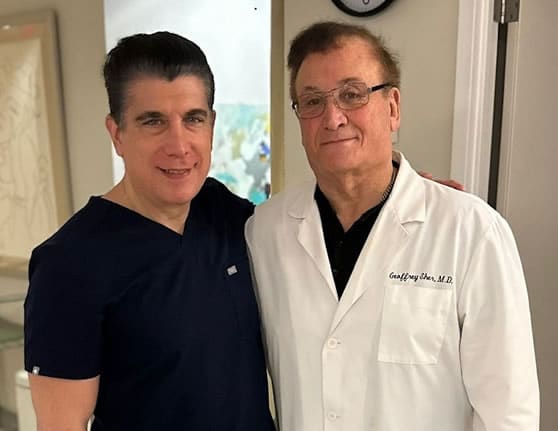
The emphasis we put on innovative, state-of-the-art technology began with our founder, Dr. Geoffrey Sher, one of the pioneers in the field of IVF, who has been influential in the births of more than 17,000 IVF babies. Dr. Sher plays an active role alongside our medical director, Dr. Drew Tortoriello. Together they have over 55 years of clinical and academic experience in the field of Reproductive Medicine.

Together, they were the first to introduce Preimplantation Genetic Testing which vastly increases the chances of IVF success and is now performed worldwide. They also pioneered the testing and treatment of Immunologic Implantation Dysfunction (IID) that frequently leads to “unexplained” infertility, repeated IVF failure, and recurrent miscarriage. We’re able to conduct a variety of other treatments and tests right on site. For example, we offer on-site sperm testing to ensure proper sperm selection techniques are used to create the healthiest possible embryos.

For those women seeking to preserve their fertility, we offer vitrification, a state-of-the-art technology that ensures their eggs will ultimately be thawed successfully.

From the moment you walk into our state-of-the-art New York fertility clinic, you’ll feel the warmth and compassion that will define your experience with us. Drew Tortoriello, MD serves as our Medical Director. He’s an outstanding fertility specialist that you’ll find to be caring, compassionate and personable.

When you receive fertility treatment with us, your doctor will participate with hands-on management of your case throughout your treatment. We’ve gained a reputation of being the place to turn to when all other treatment options have failed, and patients are searching for hope and fresh alternatives.

TL;DR:

  • Our doctors are among the best in the world, with over 55 years of combined experience
  • Together, they pioneered several tests and treatments that can help where other treatments have failed
  • We do many tests right here at the clinic, which means faster results and ensures proper techniques are used
  • Your doctor will be with you at every step of your treatment
  • Everyone here will get to know you during your treatment so you won’t just feel like a number
  • We’re known for being the clinic to go to when all other treatments have failed

Author