Your Trusted Fertility Clinic In New York, NY

Your Journey. Your Family.

At Sher Fertility Solutions, we understand that each patient is unique. Everything we do is customized to you and your specific needs.
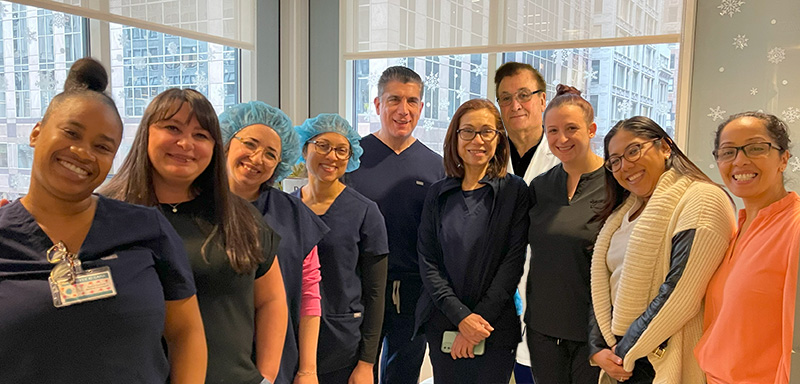
Group photo of the Sher Fertility Solutions clinic team

Where Are You On Your Fertility Journey?

I´m just starting out

I need more information

Ready to get started

Book a consultation

I need help

Ask a question

Su clínica de fertilidad de confianza en New York, NY

Tu viaje. Tu familia.

En Sher Fertility Solutions, entendemos que cada paciente es único. Todo lo que hacemos está personalizado para usted y sus necesidades específicas.

Group photo of the Sher Fertility Solutions clinic team

Nuestros Servicios

Fertilización In Vitro (IVF)

La Fertilización In Vitro (IVF) es uno de los tratamientos de fertilidad más efectivos. Este proceso implica la combinación de óvulos y espermatozoides en un laboratorio para crear embriones, que luego se transfieren al útero. Más información sobre IVF

Inseminación Intrauterina (IUI)

La Inseminación Intrauterina (IUI) es un procedimiento menos invasivo en el que se colocan espermatozoides directamente en el útero durante la ovulación. Es una opción popular para parejas con problemas leves de fertilidad. Más información sobre IUI

Congelación de Óvulos

La Congelación de Óvulos permite a las mujeres preservar su fertilidad para el futuro. Este procedimiento es ideal para aquellas que desean retrasar la maternidad por razones personales o médicas. Más información sobre Congelación de Óvulos

Reserve una consulta

Si está interesado en tener una consulta sobre tratamiento de fertilidad con uno de nuestros médicos, por favor complete este formulario

Su clínica de fertilidad de confianza en New York, NY

Five Start Rating

Your Trusted Fertility Clinic in New York, NY

Five Start Rating

Your Trusted Fertility Clinic in New York, NY

The Best of Dr. Sher on The Egg Whisperer Show

Our Services

Infertility diagnosis/treatment

The causes of infertility are multiple and are often difficult to define but may include anatomical conditions involving tubal patency and/or function as well as diseases of the testicles and/or or sperm ducts, dysfunctional levels of certain hormones in both men and women, and ovulation difficulties in women.

Recurrent miscarriage diagnosis/treatment

The time has come to embrace the reality that the term “unexplained” is rarely applicable to 1) infertility of unknown cause, 2) repeated IVF failure, and 3) recurrent pregnancy loss (RPL). More often than not, rather than being “unexplained,” the condition is simply ignored and as such remains “undiagnosed.” All that is needed is to investigate and treat the issue appropriately in order to solve the problem.

Egg freezing for future fertility

There are many reasons why patients may need to preserve their fertility. For some, it may be a focus on education and career delays and for others it may be due to an illness. Although the decline in reproductive potential that occurs with age cannot be reversed, freezing your eggs at a younger age may allow the eggs to be preserved until you are ready to conceive. While there are no guarantees, using cryopreserved eggs may improve your chances for pregnancy in the future.

Testimonials

Ask Our Doctors

Dear Patients,
I created this forum to welcome any questions you have on the topic of infertility, IVF, conception, testing, evaluation, or any related topics. I do my best to answer all questions in less than 24 hours. I know your question is important and, in many cases, I will answer within just a few hours. Thank you for taking the time to trust me with your concern.

– Geoffrey Sher, MD

Name: Naveena S

Hi Dr.Sher,
Thank you for taking the time to help all of us.

I was on Birth Control for two years, came out of it and became pregnant naturally. Unfortunately the baby had a severe heart defect and we had to terminate the pregnancy at 21 weeks.

After the loss we did fertility testing and found my husband had low motility. So we did one letrozole Timed Intercourse, one IUI (both failed) and moved to IVF. We checked for endometritis and came back negative. We did hysteroscopy and it was normal. Our first transfer failed.

My question is, the only time I was pregnant was after a long suppression of BirthControl.
Does it indicate that I may have silent endometriosis and the long suppression helped? Would you suggest me to get tested for endometriosis/immuno factors at this point?

Thanks a lot Dr.Sher.

Answer:

Perhaps you do have underlying endometriosis but taking the BCP for some time before conceiving probably had nothing to do with your original success. Perhaps we should talk about your secondary infertility.

It is one thing for a woman who has never been able to conceive (primary infertility) to come to grips with undergoing In Vitro Fertilization. It is quite another matter for someone who has successfully achieved a pregnancy in the past having to come to terms with a subsequent inability to conceive (secondary infertility). When this happens, it raises issues of guilt, a declining sense of self-worth and ultimately self-recrimination. The ramifications often impact family relationships involving partners and siblings. The truth is that secondary infertility can be just as difficult for individuals and family to deal with as primary infertility.

There are many factors that contribute to the problem of secondary infertility. These include:

Social and marital factors: In this modern day and age where at least one in two marriages ends in divorce, it is not surprising that there would be an inevitable hiatus in childbearing. This often results in a considerable delay in re-initiating family building. Since the biological clock keeps on ticking in the interim, advancing age can, and often does, have a profound affect on a woman’s ability to subsequently conceive and successfully complete a pregnancy. In my experience, this is one of the most common reasons for secondary infertility. In addition, by the time a decision is made to enter a new relationship, many men and women will have undergone a prior sterilization procedure which now needs to be addressed. To make matters worse, many such men and women first opt for surgical reversal of their occlusive surgery, only to learn in the end that the procedures were not successful, and they now need to consider in vitro fertilization (IVF) in one form or another.

Financial factors: Here, the cost of raising a child often weighs heavily, especially in this present tough economic climate. This is becoming more of an issue as women playing an ever increasing role as a primary bread winner.

Career demands: There can be little doubt that when it comes to climbing the career ladder, women are considerably disadvantaged by the fact that pregnancy and the immediate demands of child rearing take away from their ability to compete with men. As such, many women choose to delay having another child until such time as they have been able to make up for prior lost opportunity.

Medical barriers to fertility: Certain common medical conditions, while not absolutely precluding pregnancy, make it much more difficult to conceive.

Endometriosis: It is not uncommon for women with endometriosis to achieve a pregnancy, but find difficulty in doing so again at a later date. The reason for this is that while most women with endometriosis have patent fallopian tubes, the environment surrounding their tubes is compromised due to pelvic toxins that are produced by the endometriotic implants. These toxins compromise egg fertilization potential, making it more difficult for sperm in the fallopian tube to fertilize the egg upon its arrival there. As such, endometriosis is one of the commonest causes of secondary infertility.

Tubal damage due to prior pelvic inflammatory disease: In first world countries, the early and often indiscriminate use of antibiotics for the slightest symptom has led to the point where an acute attack of pelvic inflammatory disease is often masked. As such, less than 30% of American women with tubal damage have knowledge that their tubes are compromised and that they might have subsequent difficulty in conceiving. Since, in many such cases the tubal damage will not have totally blocked both tubes, some of the women so affected might experience a pregnancy but have difficulty in conceiving again later down the line.

Dysfunctional ovulation: Since ovulation as well as normal hormonal support of the early implanting embryo are both essential for a healthy pregnancy to occur, it follows that women with irregular or dysfunctional ovulation (e.g., polycystic ovarian syndrome – PCOS, persistent follicular luteal phase deficiencies or post birth control pill ovulatory problems) might sporadically conceive and thereupon find it difficult to do achieve another pregnancy later on.

Immunologic Implantation Dysfunction (IID): has become ever more apparent that immunologic factors play an important role in achieving healthy implantation. Women with endometriosis (regardless of its severity), those with a personal or family history of autoimmune diseases such as lupus erythematosus, rheumatoid arthritis and thyroid autoimmunity (TAI), and some cases where the man and the woman share certain genetic similarities (alloimmune implantation dysfunction), will have activated CTL/NK cells that  can inhibit or compromise healthy implantation. This is an often overlooked cause of secondary infertility. Most such autoimmune/alloimmune cases require selective immunotherapy and IVF.

Antisperm Antibodies: Although infrequent, some cases of secondary infertility might also be caused by the woman harboring antisperm antibodies. In such cases IVF is mandated.

Previous post-pregnancy uterine infection: Retention of products of conception after the birth of a child, miscarriage, or abortion can so damage the uterine lining as to result in subsequent implantation failure. Unless specifically looked for, this will usually be unknown to the patient, who will simply present with secondary infertility. Treatment is often difficult because such patients might not respond adequately to surgical removal of intrauterine scar tissue or to hormonal or Viagra therapy

Male immunologic factors: Most men who have undergone a previous vasectomy more than 10 years earlier, will have antisperm antibodies that will interfere with fertilization. Such cases require IVF with intracytoplasmic sperm injection (ICSI). Here we offer a few words of caution to men who are considering undergoing surgical reversal of vasectomy. Always first have a test done to exclude the presence of circulating antisperm antibodies, because in such cases, even if the reversal is successfully performed, they will not be able to initiate a pregnancy without IVF/ICSI.

Whatever the cause, secondary infertility often affects older couples disproportionately, creating a sense of urgency and even desperation in achieving a viable pregnancy before time runs out. It is for this reason that IVF becomes the treatment of choice in such cases. However, even IVF becomes progressively less successful with advancing age of the woman (whose eggs are being fertilized). In such cases it is important for the couple to be realistic with regard to their expectations. Here, options that include embryo banking and egg donation should be carefully considered.

Another important point is that whenever a regularly ovulating younger woman (under 36 years of age) with patent fallopian tubes is diagnosed with secondary infertility, it is essential to consider underlying endometriosis or non-obstructive tubal disease as a possible cause. In such cases, IVF is again the treatment of choice.

ADDITIONAL INFORMATION:

I am attaching online links to two E-books which I recently  co-authored with  my partner at SFS-NY  (Drew Tortoriello MD)……. for your reading pleasure:

1.From In Vitro Fertilization to Family: A Journey with Sher Fertility Solutions (SFS) “

http://sherfertilitysolutions.com/sher-fertility-solutions-ebook.pdf

  1. “Recurrent Pregnancy Loss and Unexplained IVF Failure: The Immunologic Link

https://drive.google.com/file/d/1iYKz-EkAjMqwMa1ZcufIloRdxnAfDH8L/view

………………………………………………………………..


Latest Videos

Blog

No Results Found

The page you requested could not be found. Try refining your search, or use the navigation above to locate the post.

Our Team
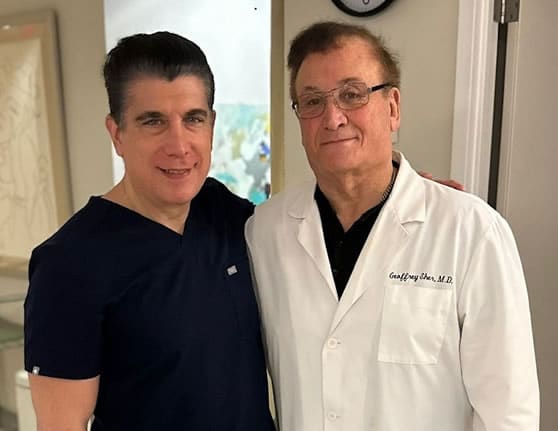
The emphasis we put on innovative, state-of-the-art technology began with our founder, Dr. Geoffrey Sher, one of the pioneers in the field of IVF, who has been influential in the births of more than 17,000 IVF babies. Dr. Sher plays an active role alongside our medical director, Dr. Drew Tortoriello. Together they have over 55 years of clinical and academic experience in the field of Reproductive Medicine.

Together, they were the first to introduce Preimplantation Genetic Testing which vastly increases the chances of IVF success and is now performed worldwide. They also pioneered the testing and treatment of Immunologic Implantation Dysfunction (IID) that frequently leads to “unexplained” infertility, repeated IVF failure, and recurrent miscarriage. We’re able to conduct a variety of other treatments and tests right on site. For example, we offer on-site sperm testing to ensure proper sperm selection techniques are used to create the healthiest possible embryos.

For those women seeking to preserve their fertility, we offer vitrification, a state-of-the-art technology that ensures their eggs will ultimately be thawed successfully.

From the moment you walk into our state-of-the-art New York fertility clinic, you’ll feel the warmth and compassion that will define your experience with us. Drew Tortoriello, MD serves as our Medical Director. He’s an outstanding fertility specialist that you’ll find to be caring, compassionate and personable.

When you receive fertility treatment with us, your doctor will participate with hands-on management of your case throughout your treatment. We’ve gained a reputation of being the place to turn to when all other treatment options have failed, and patients are searching for hope and fresh alternatives.

TL;DR:

  • Our doctors are among the best in the world, with over 55 years of combined experience
  • Together, they pioneered several tests and treatments that can help where other treatments have failed
  • We do many tests right here at the clinic, which means faster results and ensures proper techniques are used
  • Your doctor will be with you at every step of your treatment
  • Everyone here will get to know you during your treatment so you won’t just feel like a number
  • We’re known for being the clinic to go to when all other treatments have failed

Author