Your Trusted Fertility Clinic In New York, NY

Your Journey. Your Family.

At Sher Fertility Solutions, we understand that each patient is unique. Everything we do is customized to you and your specific needs.
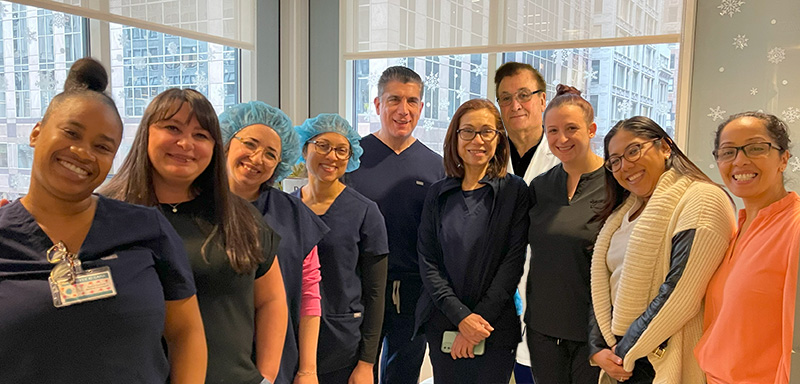
Group photo of the Sher Fertility Solutions clinic team

Where Are You On Your Fertility Journey?

I´m just starting out

I need more information

Ready to get started

Book a consultation

I need help

Ask a question

Su clínica de fertilidad de confianza en New York, NY

Tu viaje. Tu familia.

En Sher Fertility Solutions, entendemos que cada paciente es único. Todo lo que hacemos está personalizado para usted y sus necesidades específicas.

Group photo of the Sher Fertility Solutions clinic team

Nuestros Servicios

Fertilización In Vitro (IVF)

La Fertilización In Vitro (IVF) es uno de los tratamientos de fertilidad más efectivos. Este proceso implica la combinación de óvulos y espermatozoides en un laboratorio para crear embriones, que luego se transfieren al útero. Más información sobre IVF

Inseminación Intrauterina (IUI)

La Inseminación Intrauterina (IUI) es un procedimiento menos invasivo en el que se colocan espermatozoides directamente en el útero durante la ovulación. Es una opción popular para parejas con problemas leves de fertilidad. Más información sobre IUI

Congelación de Óvulos

La Congelación de Óvulos permite a las mujeres preservar su fertilidad para el futuro. Este procedimiento es ideal para aquellas que desean retrasar la maternidad por razones personales o médicas. Más información sobre Congelación de Óvulos

Reserve una consulta

Si está interesado en tener una consulta sobre tratamiento de fertilidad con uno de nuestros médicos, por favor complete este formulario

Su clínica de fertilidad de confianza en New York, NY

Five Start Rating

Your Trusted Fertility Clinic in New York, NY

Five Start Rating

Your Trusted Fertility Clinic in New York, NY

The Best of Dr. Sher on The Egg Whisperer Show

Our Services

Infertility diagnosis/treatment

The causes of infertility are multiple and are often difficult to define but may include anatomical conditions involving tubal patency and/or function as well as diseases of the testicles and/or or sperm ducts, dysfunctional levels of certain hormones in both men and women, and ovulation difficulties in women.

Recurrent miscarriage diagnosis/treatment

The time has come to embrace the reality that the term “unexplained” is rarely applicable to 1) infertility of unknown cause, 2) repeated IVF failure, and 3) recurrent pregnancy loss (RPL). More often than not, rather than being “unexplained,” the condition is simply ignored and as such remains “undiagnosed.” All that is needed is to investigate and treat the issue appropriately in order to solve the problem.

Egg freezing for future fertility

There are many reasons why patients may need to preserve their fertility. For some, it may be a focus on education and career delays and for others it may be due to an illness. Although the decline in reproductive potential that occurs with age cannot be reversed, freezing your eggs at a younger age may allow the eggs to be preserved until you are ready to conceive. While there are no guarantees, using cryopreserved eggs may improve your chances for pregnancy in the future.

Testimonials

Ask Our Doctors

Dear Patients,
I created this forum to welcome any questions you have on the topic of infertility, IVF, conception, testing, evaluation, or any related topics. I do my best to answer all questions in less than 24 hours. I know your question is important and, in many cases, I will answer within just a few hours. Thank you for taking the time to trust me with your concern.

– Geoffrey Sher, MD

Name: Randi T

I have have had 2 pregnancies, 1 resulted in miscarriage and the other resulted in mono-di girls. I am a permutation fragile x carrier and they have the gene as well. Myself and my husband would like to go through IVF to achieve another pregnancy as I had a BTL with my twins. Would it be possible to have PGD to select a male embryo and be sure fragile X is not passed down to him?
Thank you,
Randi Trent

Answer:

The answer to both questions is yes!

Fragile X syndrome occurs in individuals who carry the gene, FMR1 on an X-chromosome. This condition is inherited as a dominant X-linked disorder. With a dominant disorder, the condition results when there is only one copy of the altered gene in each cell.

Fragile syndrome occurs twice as frequently in males (1:1,200) as compared to females (1:2,500) A striking characteristic of X-linked inheritance is that fathers cannot pass X-linked traits to their sons. The Fragile X gene, FMR1, can be passed on in a family by individuals who have no apparent signs of this genetic condition. In some families, a number of members appear to be affected, whereas in other families a newly diagnosed individual may be the first family member to exhibit symptoms.

By and large, Fragile X syndrome results from a mutation in the FMR1 gene where a segment, known (CGG triplet repeat), is expanded. Under normal circumstances, the CGG triplet is repeated from 5 to approximately 55 times. In contrast, those who have Fragile X syndrome will have more than 200 repeats. CGG segments prevent the FMR from propagating the formation of a specific protein needed to protect against the development of Fragile X syndrome. Thus over-expression of CGG triplet (>200 times) on an X chromosome represents a degree of loss of this “protective protein” as to lead to the development of fragile X syndrome. Since boys have only one X chromosome, Fragile X syndrome tends to manifest much more severely in males than in females, (who have two X chromosomes).

In a normal population, the number of repeated FMR1 genes varies from 5 to about 55. Those with 55 to 200 repeats of the CGG segment are said to have an FMR1 premutation (carriers”). In women, this is liable to increase to >200 repeats in the developing eggs. Accordingly, such women are at increased risk of having a child with fragile X syndrome. Conversely, when passed by men to the next generation, CGG repeats either remain the same in size or shorten. This is why men with a permutation do not transmit the disease. However they do transmit the permutation which if carried to a subsequent female offspring can result in them transmitting Fragile X syndrome in subsequent generations.

Both males and females with fragile X pre-mutation are by and large intellectually and physically normal in outward appearance. Some may manifest with mild but often socially harmful intellectual or behavioral symptoms,. They are however usually not infertile.

Some men with a premutation are at risk of developing a manifestation of fragile X-associated tremor/ataxia syndrome (FXTAS) a condition characterized by loss of balance, tremors and memory loss. It occurs in some older male carriers of the gene. Heart bone and skin problems are also often present. Age distribution is a s follows: Seventeen percent (17%) of males aged 50-59 years, in 38 percent of males aged 60-69 years, in 47 percent of males aged 70-79 years, and in 75 percent or males aged 80 years or older. Some female premutation carriers may have diminished ovarian reserve (DOR), premature ovarian failure and FXTAS.

It is important to bear in mind that women who have approximately 55 to 200 repeats. There is no clear cut-off between the upper limit of normal and the lower limit of the premutation range. Accordingly, cases with 45-55 repeat copies fall into the so called “gray zone.” In some cases, premutations expand from generation to generation such that over time they ultimately express as full Fragile X syndrome. The larger the premutation in cases that fall in the “gray zone”, the greater is the risk of subsequent expansion to a full mutation in the offspring.

Boys with full FMR1 mutation (Fragile X syndrome) will almost routinely have moderately severe mental retardation. They will tend to have a characteristic facial appearance with a long face, enlarged cranium, protruding ears and an elongated face with a protuberant chin and forehead. Affected boys after puberty tend also to experience enlargement of the scrotum and laxicity of joints. There will also usually be characteristic behavioral problems such as lack of impulse control, temper tantrums, delay in speech and language development and perseverative speech. Hand biting, hand flapping and attention deficit /hyperactivity are other common manifestations. Fragile X syndrome is also the most common known cause of autism or “autistic-like” behaviors.

Girls with Fragile X on the other hand, tend to only have mild mental retardation. Women who have fewer repeats of the FMR-1 gene usually do not have mental retardation but often will have prematurely diminishing of ovarian reserve (DOR) with early menopause and infertility. Both men and women may develop FXTAS.

While most males with full blown clinical fragile X syndrome are mentally retarded and exhibit some or all the physical and behavioral characteristics, only about one third of females are mentally retarded. Another one third are partially mentally impaired, and the remaining third are unaffected.

Fragile X syndrome is diagnosed through DNA testing of cells using one of two methods:

  1. Polymerase Chain Reaction (PCR) or
  2. Southern blot analysis

Both methods exhibit a high degree of interpersonal variability and thus when it comes to interpreting results, there are significant limitations. This is especially the case when diagnosing a “carrier state.” Interpretation is further complicated by the presence of other fragile sites in the same region of the X chromosome.

It is recommended that in the following circumstances, patients undergoing assisted reproduction be tested for Fragile-X:

  • All mentally challenged individuals, those who are autistic, and in cases of developmental delay
  • Women with unexplained premature reduction in ovarian reserve or premature ovarian failure (menopause)
  • Individuals who have physical or behavioral characteristics of fragile X syndrome
  • Those with a family history of fragile X syndrome
  • Those with a family history of mentally challenged male or female relatives where no definitive cause has been ascertained.
  • Offspring of known carrier mothers

Prenatal diagnosis can be made by 2nd trimester amniocentesis, which yields definitive results. In contrast, results obtained from 1st trimester chorionic villus sampling (CVS) should be interpreted with caution, because the status of the FMR1 gene often will not fully manifest in chorionic villi until the second trimester.

Feel free to contact my assistant, Patti Converse at 702-533-2691 and set up an online consultation with  me to discuss!


Geoff Sher


Latest Videos

Blog

No Results Found

The page you requested could not be found. Try refining your search, or use the navigation above to locate the post.

Our Team
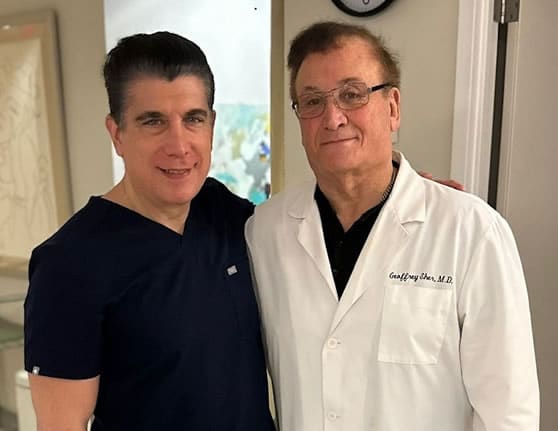
The emphasis we put on innovative, state-of-the-art technology began with our founder, Dr. Geoffrey Sher, one of the pioneers in the field of IVF, who has been influential in the births of more than 17,000 IVF babies. Dr. Sher plays an active role alongside our medical director, Dr. Drew Tortoriello. Together they have over 55 years of clinical and academic experience in the field of Reproductive Medicine.

Together, they were the first to introduce Preimplantation Genetic Testing which vastly increases the chances of IVF success and is now performed worldwide. They also pioneered the testing and treatment of Immunologic Implantation Dysfunction (IID) that frequently leads to “unexplained” infertility, repeated IVF failure, and recurrent miscarriage. We’re able to conduct a variety of other treatments and tests right on site. For example, we offer on-site sperm testing to ensure proper sperm selection techniques are used to create the healthiest possible embryos.

For those women seeking to preserve their fertility, we offer vitrification, a state-of-the-art technology that ensures their eggs will ultimately be thawed successfully.

From the moment you walk into our state-of-the-art New York fertility clinic, you’ll feel the warmth and compassion that will define your experience with us. Drew Tortoriello, MD serves as our Medical Director. He’s an outstanding fertility specialist that you’ll find to be caring, compassionate and personable.

When you receive fertility treatment with us, your doctor will participate with hands-on management of your case throughout your treatment. We’ve gained a reputation of being the place to turn to when all other treatment options have failed, and patients are searching for hope and fresh alternatives.

TL;DR:

  • Our doctors are among the best in the world, with over 55 years of combined experience
  • Together, they pioneered several tests and treatments that can help where other treatments have failed
  • We do many tests right here at the clinic, which means faster results and ensures proper techniques are used
  • Your doctor will be with you at every step of your treatment
  • Everyone here will get to know you during your treatment so you won’t just feel like a number
  • We’re known for being the clinic to go to when all other treatments have failed

Author