Your Trusted Fertility Clinic In New York, NY

Your Journey. Your Family.

At Sher Fertility Solutions, we understand that each patient is unique. Everything we do is customized to you and your specific needs.

Group photo of the Sher Fertility Solutions clinic team

Where Are You On Your Fertility Journey?

I´m just starting out

I need more information

Ready to get started

Book a consultation

I need help

Ask a question

Su clínica de fertilidad de confianza en New York, NY

Tu viaje. Tu familia.

En Sher Fertility Solutions, entendemos que cada paciente es único. Todo lo que hacemos está personalizado para usted y sus necesidades específicas.

Group photo of the Sher Fertility Solutions clinic team

Nuestros Servicios

Fertilización In Vitro (IVF)

La Fertilización In Vitro (IVF) es uno de los tratamientos de fertilidad más efectivos. Este proceso implica la combinación de óvulos y espermatozoides en un laboratorio para crear embriones, que luego se transfieren al útero. Más información sobre IVF

Inseminación Intrauterina (IUI)

La Inseminación Intrauterina (IUI) es un procedimiento menos invasivo en el que se colocan espermatozoides directamente en el útero durante la ovulación. Es una opción popular para parejas con problemas leves de fertilidad. Más información sobre IUI

Congelación de Óvulos

La Congelación de Óvulos permite a las mujeres preservar su fertilidad para el futuro. Este procedimiento es ideal para aquellas que desean retrasar la maternidad por razones personales o médicas. Más información sobre Congelación de Óvulos

Reserve una consulta

Si está interesado en tener una consulta sobre tratamiento de fertilidad con uno de nuestros médicos, por favor complete este formulario

Su clínica de fertilidad de confianza en New York, NY

Five Start Rating

Your Trusted Fertility Clinic in New York, NY

Five Start Rating

Your Trusted Fertility Clinic in New York, NY

The Best of Dr. Sher on The Egg Whisperer Show

Our Services

Infertility diagnosis/treatment

The causes of infertility are multiple and are often difficult to define but may include anatomical conditions involving tubal patency and/or function as well as diseases of the testicles and/or or sperm ducts, dysfunctional levels of certain hormones in both men and women, and ovulation difficulties in women.

Recurrent miscarriage diagnosis/treatment

The time has come to embrace the reality that the term “unexplained” is rarely applicable to 1) infertility of unknown cause, 2) repeated IVF failure, and 3) recurrent pregnancy loss (RPL). More often than not, rather than being “unexplained,” the condition is simply ignored and as such remains “undiagnosed.” All that is needed is to investigate and treat the issue appropriately in order to solve the problem.

Egg freezing for future fertility

There are many reasons why patients may need to preserve their fertility. For some, it may be a focus on education and career delays and for others it may be due to an illness. Although the decline in reproductive potential that occurs with age cannot be reversed, freezing your eggs at a younger age may allow the eggs to be preserved until you are ready to conceive. While there are no guarantees, using cryopreserved eggs may improve your chances for pregnancy in the future.

Testimonials

Ask Our Doctors

Dear Patients,
I created this forum to welcome any questions you have on the topic of infertility, IVF, conception, testing, evaluation, or any related topics. I do my best to answer all questions in less than 24 hours. I know your question is important and, in many cases, I will answer within just a few hours. Thank you for taking the time to trust me with your concern.

– Geoffrey Sher, MD

Name: Shira M

Dear Doctor, I would like to ask for your opinion of ERA specifically in women with adenomyosis. I had an ERA which showed that I would need one extra day of progesterone (so transfer after 6 days). However, a new doctor came at my clinic and he does all transfers after 5 days of progesterone. After that, I had three transfers: one at 5.5 days which worked but resulted in a late loss, and two at 5 days with no implantation (not even a chemical). What do you think in the context of adenomyosis? Thank you very much in advance.

Answer:

Herewith my response on both issues;

A: ADENOMYOSIS:

Adenomyosis is a condition where endometrial glands develop outside the uterine lining (endometrium), within the muscular wall of the uterus (myometrium). Definitive diagnosis of adenomyosis is difficult to make. The condition should be suspected when a premenopausal woman (usually>25 years of age) presents with pelvic pain, heavy painful periods, pain with deep penetration during intercourse, “unexplained infertility” or repeated miscarriages and thereupon, when on digital pelvic examination she is found to have an often smoothly enlarged (bulky) soft tender uterus. Previously, a definitive diagnosis was only possible after a woman had her uterus removed (hysterectomy) and it this was inspected under a microscope. However the use of uterine magnetic resonance imaging (MRI) now permits reliable diagnosis. Ultrasound examination of the uterus on the other hand , while not permitting definitive diagnosis, is a very helpful tool in raising a suspicion of the existence of adenomyosis.


Criteria used to make a diagnosis of adenomyosis on transvaginal ultrasound:


  • Smooth generalized enlargement of the uterus.
  • Asymmetrical thickening of one side of the (myometrium) as compared to another side.
  • Thickening (>12mm) of the junctional zone between the endometrium and myometrium with increased blood flow.
  • Absence of a clear line of demarcation between the endometrium and the myometrium
  • Cysts in the myometrium
  • One or more non discrete (not encapsulated) tumors (adenomyomas) in the myometrium.


Since there is no proven independent relationship between adenomyosis and egg/embryo quality any associated reproductive dysfunction (infertility/miscarriages) might be attributable to an implantation dysfunction. It is tempting to postulate that this is brought about by adenomyosis-related anatomical pathology at the endometrial-myometrial junction. However, many women with adenomyosis, do go on to have children without difficulty. Given that 30%-70% of women who have adenomyosis also have endometriosis…. a known cause of infertility, it is my opinion that infertility caused by adenomyosis is likely linked to endometriosis where infertility is at least in part due to a toxic pelvic environment that compromises egg fertilization potential and/or due to an immunologic implantation dysfunction (IID) linked to activation of uterine natural killer cells (NKa). Thus, in my opinion all women who are suspected of having adenomyosis-related reproductive dysfunction (infertility/miscarriages) should be investigated for endometriosis and for IID. The latter, if confirmed would make them candidates for selective immunotherapy (using intralipid/steroid/heparin) in combination with IVF.


Surgery: Conservative surgery to address adenomyosis-related infertility involves excision of portions of the uterus with focal or nodular adenomyosis and/or excision of uterine adenomyomas. It is very challenging and difficult to perform because adenomyosis does not have distinct borders that distinguish normal uterine tissue from the lesions. In addition, surgical treatment for adenomyosis-related reproductive dysfunction is of questionable value and of course is  not an option for diffuse adenomyosis.


Medical treatment: There are three approaches.

  • GnRH agonists (Buserelin/Lupron) which is thought to work by lowering estrogen levels.
  • Aromatase inhibitors such as Letrozole have also been tried with limited success
  • Inhibitors of angiogenesis: The junctional zone in women with adenomyosis may grow blood vessels more readily that other women (i.e. angiogenesis). A hormone known as VEGF can drive this process. It is against this background that it has been postulated that use of drugs that reduce the action of VEGF and thereby counter blood vessel proliferation in the uterus could have a therapeutic benefit. While worth trying in some cases, thus far such treatment has been rather disappointing
  • Immunotherapy to counter IID: The use of therapies such as Intralipid (or IVIG)/steroids/heparin in combination with IVF might well hold promise in those women with adenomyosis who have NKa.

Fortunately, not all women with adenomyosis are infertile. For those who are, treatment presents a real problem. Even when IVF is used and the woman conceives, there is still a significant risk of miscarriage. Since the condition does not compromise egg/embryo quality, women with adenomyosis-related intractable reproductive dysfunction who fail to benefit from all options referred to above…(including IVF) might as a last resort consider  Gestational surro resort consider  Gestational surrogacy.

B: ERA


The blastocyst and the endometrium are in a constant state of cross-talk. In order for successful implantation to take place, the blastocyst must be at the appropriate stage of development, and needs to signal a well synchronized endometrium to ‘accept it”. This dialogue between embryo and endometrium involves growth factors, cytokines, immunologic accommodations, cell adhesion molecules, and transcription factors. These are all mostly genetically driven but are also heavily influenced by numerous physiologic, pathophysiologic, hormonal and molecular mechanisms capable of profoundly affecting the receptivity of the secretory endometrium to the overtures made by the embryo, to implant. 

Embryo implantation takes place 6-9 days after ovulation. This period is commonly referred to as the “window of implantation (WOI)”. In the past it was believed that as long as the embryo reached the uterus in this 4 day time frame, its chance of implanting would not be affected.

In 2013, after evaluating 238 genes in the secretory endometrium and applying bioformatics, Ruiz-Alonzo, et all introduced the Endometrial Receptivity Array (ERA) . Using this test, they categorized mid-secretory endometria into 4 categories: “a) proliferative, b) pre-receptive, c) receptive or d) post-receptive”. They claimed that women with pre-receptive or post-receptive endometria were more likely to experience failed implantation post-embryo transfer (ET).

It was in large part this research which suggested that the concept of a relatively “wide” (4day) WOI, was flawed, that an optimal WOI is likely much narrower and could be a critical factor in determining the success or failure of implantation post-ET. Ruiz-Alonzo also  reported that about 25% of women with recurrent IVF failure (RIF), have pre, or post-receptive endometria. They presented data suggesting that  viable IVF pregnancy rates could be enhanced,

by deferring FET by about 24 hours in women who had pre-receptive endometria and bringing ET forward by the same amount of time, in women with post-receptive endometria,


There is no doubt that ERA testing has opened the door to an intriguing arena for research. Presently however, available data is inconclusive. Here, following  recent studies are 2 dissenting opinions regarding  the value for ERA:

  • Basil and Casper (2018) state: “Performing the ERA test in a mock cycle prior to a FET does not seem to improve the ongoing pregnancy rate in good prognosis patients. Further large prospective studies are needed to elucidate the role of ERA testing in both good prognosis patients and in patients with recurrent implantation failure”
  • Churchill and Comstock (2017)  conclude:” In our preliminary observations, the non-receptive ERA group had similar live birth rates compared to the receptive ERA group. It appears the majority of the pregnancies conceived in the non-receptive group occurred during ovulatory cycles and thus a non-receptive ERA in a medicated cycle likely does not have prognostic value for ovulatory cycles. Larger studies are needed to assess the prognostic value of ERA testing in the gen-eral infertility population.”

There are additional negatives that relate to the considerable emotional and financial cost of doing ERA testing:

  1. First, the process costs $600-$1000 to undertake
  2. , Second, it requires that the patient undergo egg retrieval, vitrify (cryobank) all blastocysts, res for 1 or more cycles to allow their hormonal equilibrium to restore, do an ERA biopsy to determine the synchronicity of the endometrium, wait a few weeks for the results of the test and thereupon engage in undertaking an additional natural or hormonal preparation cycle for timed FET. This represents a significant time lapse, emotional cost and additional expense.

Presently, ERA testing is only advocated for women who have experienced several IVF failures. However, some authorities are beginning to advocate that it become routine for women undergoing all IVF.

The  additional financial cost inherent in the performance of the ERA test ($600-$1000), the considerable time delay in getting results, the fact that awaiting results of testing and preparing the patient for FET, of necessity extends the completion of the IVF/ET process by at least a few months, all serve to increase the emotional and financial hardship confronting patients undergoing ERA. Such considerations, coupled with the current absence of conclusive data that confirm efficacy, are arguments against the widespread use of ERA . In my opinion, ERA testing should presently be considered as being  one additional diagnostic and be confined to women with “unexplained” RIF.

Gold standard statistical analyses require that all confounding variables be controlled while examining the effect of altering the one under assessment. There is an obvious interplay of numerous, ever changing variables involved in outcome following ET,  e.g. embryo competency, anatomical configuration of the uterus and the contour of the endometrial cavity, endometrial thickness, immunologic and molecular factors as well as the very important  effect of technical skill/expertise in performing the  ET procedure …(to mention but a few). It follows that it is virtually impossible to draw reliable conclusions from IVF-related randomized controlled studies that use outcome as the end-point. This applies equally to results reported following “ gold standard”  testing on the efficacy of ERA and, is one of the main reasons why I question the reliability of reported data (positive or negative).

The fact is that IVF (and related technologies) constitute neither a “pure science” nor a “pure art”. Rather they represent an “art-science blend”, where scientific principles applied to longitudinal experience and technical expertise coalesce to produce a biomedical product that will invariably differ (to a greater or lesser degree) from one set of clinical circumstances to another.

Since, the ultimate goal of applied Assisted Reproductive Medicine is to safely achieve the birth of a viable and healthy baby, the tools we apply, that are aimed at achieving this end-point, are honed through the adaptation of scientific principles and concepts, experience and expertise, examined and tested longitudinally over time. Needless to say, the entire IVF/ET process is of necessity subject to change and adaptation as new scientific and technical developments emerge.

This absolutely applies to the ERA as well!

______________________________________________________

ADDENDUM: PLEASE READ!!

INTRODUCING SHER FERTILITY SOLUTIONS (SFS)

Founded in April 2019, Sher Fertility Solutions (SFS) offers online (Skype/FaceTime) consultations to patients from > 40 different countries. All consultations are followed by a detailed written report presenting my personal recommendations for treatment of what often constitute complex Reproductive Issues.

 If you wish to schedule an online consultation with me, please contact my assistant (Patti Converse) by phone (800-780-7437/702-533-2691), email (concierge@SherIVF.com) or,  enroll online on then home-page of my website (www.SherIVF.com). 


Latest Videos

Blog

No Results Found

The page you requested could not be found. Try refining your search, or use the navigation above to locate the post.

Our Team
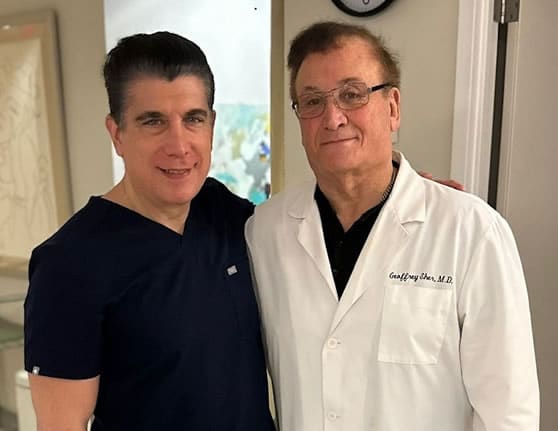
The emphasis we put on innovative, state-of-the-art technology began with our founder, Dr. Geoffrey Sher, one of the pioneers in the field of IVF, who has been influential in the births of more than 17,000 IVF babies. Dr. Sher plays an active role alongside our medical director, Dr. Drew Tortoriello. Together they have over 55 years of clinical and academic experience in the field of Reproductive Medicine.

Together, they were the first to introduce Preimplantation Genetic Testing which vastly increases the chances of IVF success and is now performed worldwide. They also pioneered the testing and treatment of Immunologic Implantation Dysfunction (IID) that frequently leads to “unexplained” infertility, repeated IVF failure, and recurrent miscarriage. We’re able to conduct a variety of other treatments and tests right on site. For example, we offer on-site sperm testing to ensure proper sperm selection techniques are used to create the healthiest possible embryos.

For those women seeking to preserve their fertility, we offer vitrification, a state-of-the-art technology that ensures their eggs will ultimately be thawed successfully.

From the moment you walk into our state-of-the-art New York fertility clinic, you’ll feel the warmth and compassion that will define your experience with us. Drew Tortoriello, MD serves as our Medical Director. He’s an outstanding fertility specialist that you’ll find to be caring, compassionate and personable.

When you receive fertility treatment with us, your doctor will participate with hands-on management of your case throughout your treatment. We’ve gained a reputation of being the place to turn to when all other treatment options have failed, and patients are searching for hope and fresh alternatives.

TL;DR:

  • Our doctors are among the best in the world, with over 55 years of combined experience
  • Together, they pioneered several tests and treatments that can help where other treatments have failed
  • We do many tests right here at the clinic, which means faster results and ensures proper techniques are used
  • Your doctor will be with you at every step of your treatment
  • Everyone here will get to know you during your treatment so you won’t just feel like a number
  • We’re known for being the clinic to go to when all other treatments have failed

Author